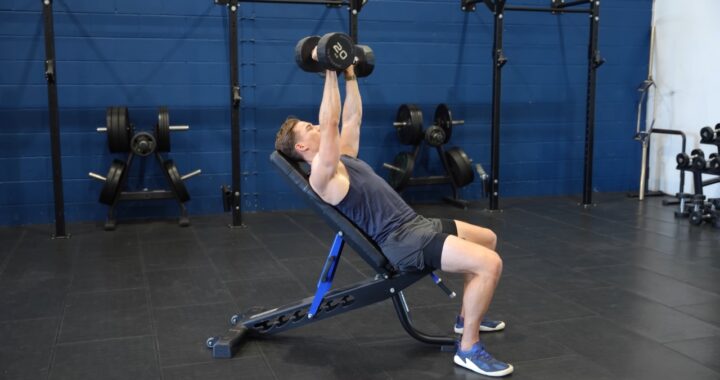
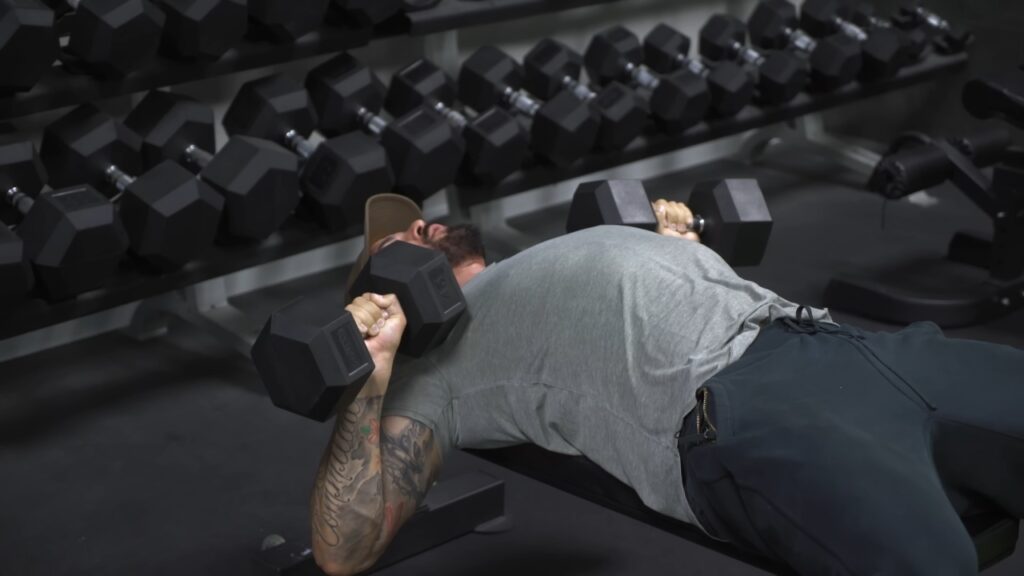
For most dumbbell chest workouts, we recommend starting with the flat dumbbell press and following it with an incline press.
The flat dumbbell press gives you a reliable main lift for building chest strength, training the pectoral muscles, and tracking progress. Incline pressing adds another useful angle, with greater emphasis on the upper chest.
Exercise order also determines where your best effort goes. Your chest, triceps, and shoulders are freshest at the beginning of a session, so we prefer using that energy on the main movement.
There are good reasons to reverse the order, particularly when upper-chest development is your priority. For general chest training, though, flat first and incline second is our preferred starting point.
Why We Put the Flat Dumbbell Press First
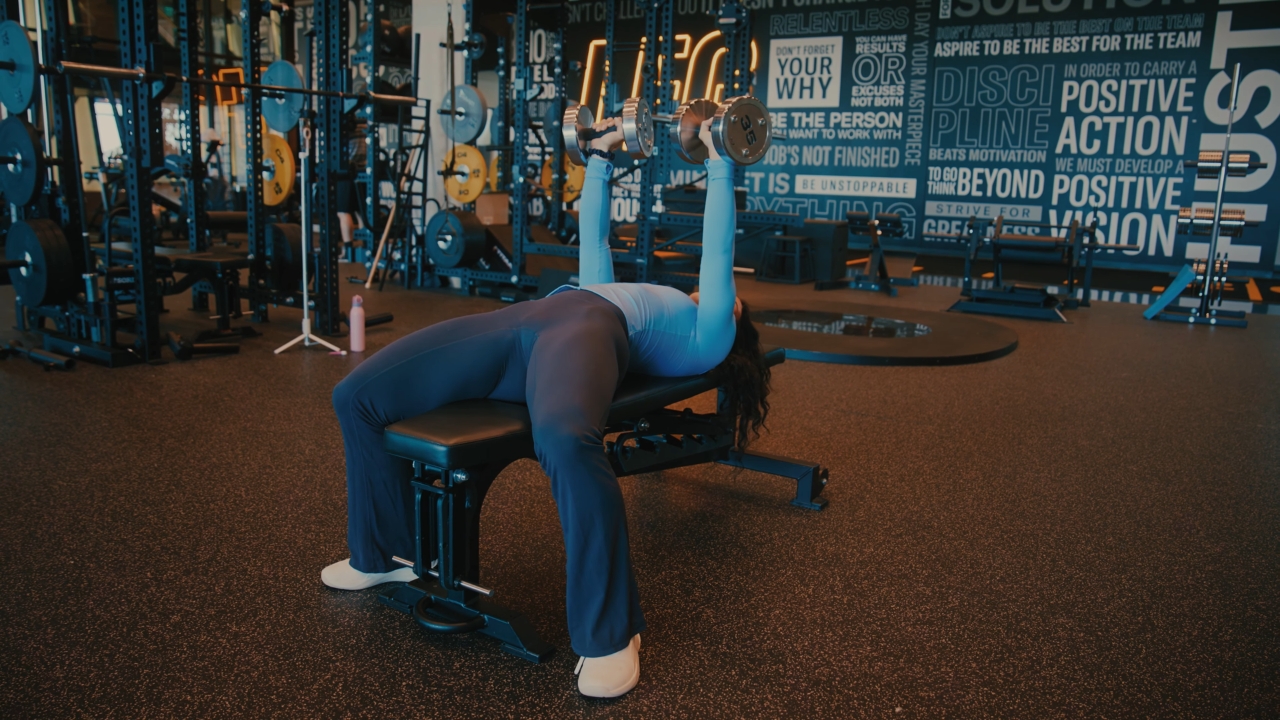
The flat dumbbell press trains the pectoralis major, anterior deltoids, and triceps through a horizontal pressing movement.
It also gives you a stable reference point for measuring strength.
With the bench fixed at 0 degrees, you can repeat the same setup each week and concentrate on improving your performance. There are fewer variables to manage compared with constantly changing your pressing angle.
We favor a simple progression:
- Choose a weight you can press for 6–10 controlled repetitions.
- Keep your shoulder position, elbow path, and range of motion consistent.
- Add repetitions as your strength improves.
- Increase the weight once you reach the top of your target range.
For example, taking a pair of 50-pound dumbbells from eight repetitions to ten with the same technique is measurable progress.
There is also a practical loading advantage. Most lifters can handle more weight on a flat press than on an incline press, making it a useful exercise for challenging the chest and triceps.
That doesn’t automatically guarantee greater muscle growth. It simply makes flat pressing an attractive main lift when general pressing strength is part of the goal.
Flat and Incline Pressing Do Not Train the Chest Identically
View this post on Instagram
Changing the bench angle changes the relationship between your upper arm and torso. That affects how different regions of the pectoralis major and surrounding muscles contribute to the press.
The upper, or clavicular, portion of the chest becomes particularly interesting here.
A 2020 study comparing five bench angles examined pressing at 0, 15, 30, 45, and 60 degrees.
The researchers found that:
- Upper-pectoral muscle activity was greatest at 30 degrees.
- Middle and lower pectoral activity was higher during flat pressing.
- Anterior deltoid activity reached its highest level at 60 degrees.
Another investigation using high-density electromyography found that pectoralis major excitation shifted toward the clavicular region when participants moved from flat pressing to a 45-degree incline.
There are limitations worth acknowledging. Both studies involved barbell pressing, and muscle activation measurements cannot tell us exactly how much long-term growth each exercise will produce.
Still, the findings support a useful programming principle: bench angle changes how the chest participates in pressing.
We use flat and incline presses to provide complementary training stimulus. The flat press is our general-purpose movement, while the incline gives additional emphasis to the upper portion of the chest.
Exercise Order Affects Where You Perform Best
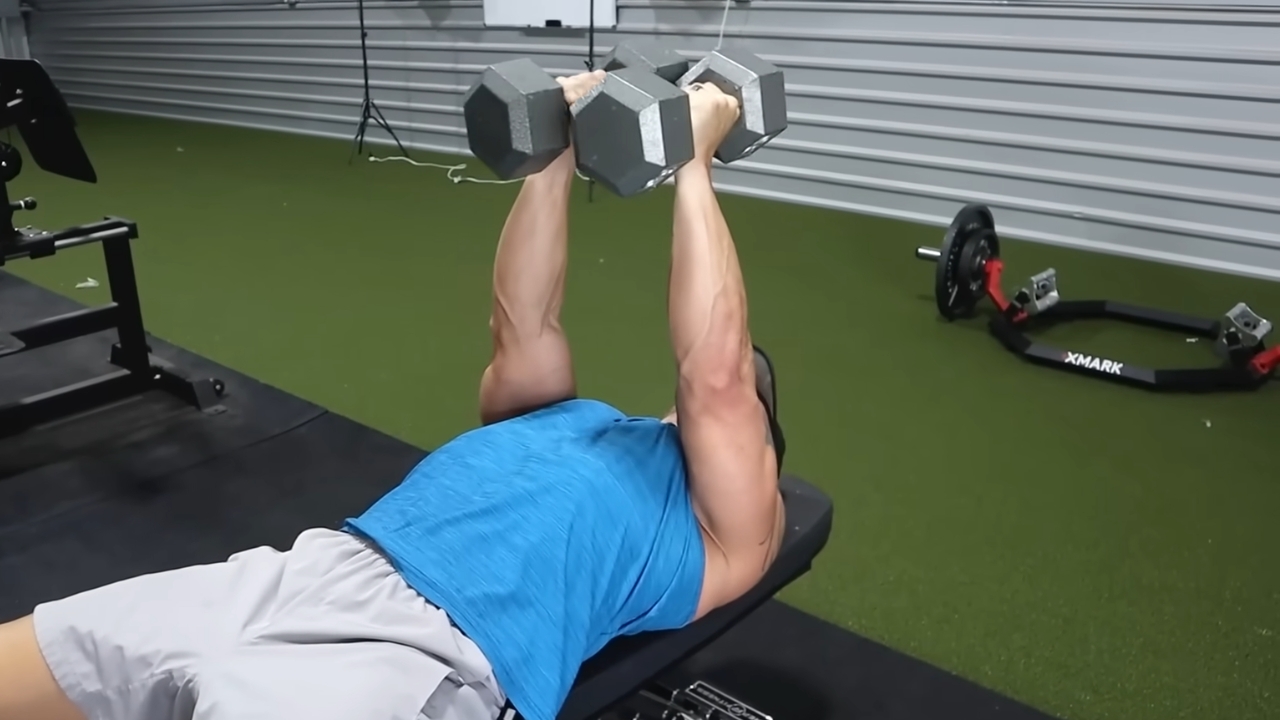
Performing several challenging sets of incline presses before your flat presses creates fatigue in muscles needed for both movements.
By the time you reach the flat bench, your triceps, front deltoids, and chest have already completed substantial work.
That can reduce the repetitions or weight you manage.
A systematic review and meta-analysis published in the European Journal of Sport Science examined how resistance-training exercise order affects strength and hypertrophy.
The researchers reviewed 11 studies and found that strength gains generally favored exercises placed earlier in the workout. They found no significant overall hypertrophy difference attributable to exercise order.
The review did not specifically establish that flat-before-incline dumbbell pressing produces superior results. Its findings support prioritizing whichever exercise matters most to your strength goals.
For our standard chest sessions, that exercise is the flat dumbbell press.
Putting it first lets you approach your heaviest pressing sets with less accumulated fatigue and gives you a better opportunity to maintain consistent performance.
Flat Pressing Is a Better Anchor Exercise
We like giving each exercise a specific purpose.
The flat dumbbell press serves as the main strength movement. Incline pressing provides additional chest volume with an emphasis on the upper pecs.
That approach also makes workout progression easier to manage.
| Feature | Flat Dumbbell Press | Incline Dumbbell Press |
|---|---|---|
| Main emphasis | General chest development | Greater upper-chest emphasis |
| Typical loading | Usually heavier | Usually lighter |
| Suggested reps | 6–10 | 8–12 |
| Bench angle | 0° | 15–30° |
| Front-delt involvement | Substantial | Generally increases with incline |
| Our preferred order | First | Second |
For the main press, we recommend challenging working sets with enough recovery to maintain performance.
Our guide to longer rest periods explains why rushing between demanding sets can limit the quality of subsequent repetitions.
There’s no particular advantage in making the second pressing exercise unnecessarily complicated either. Pick a repeatable incline, control the dumbbells, and accumulate productive repetitions.
For a balanced upper-body session, pair your pressing with single-arm dumbbell rows. They add horizontal pulling work for the back.
You can also distribute these exercises across the week. Our 3-day dumbbell workout provides a straightforward full-body structure.
Keep the Incline Lower Than You Think
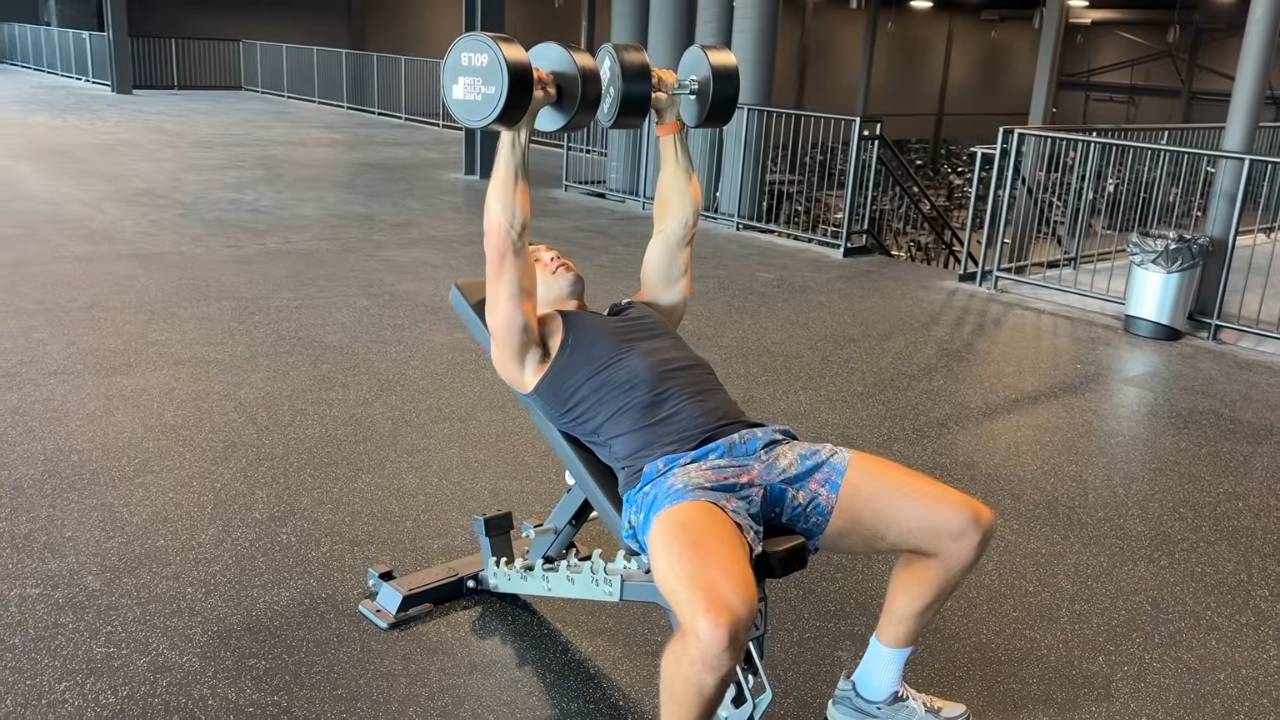
Our preferred starting angle for an incline dumbbell press is approximately 15–30 degrees.
A modest incline changes the direction of pressing enough to emphasize the upper chest while keeping the exercise recognizably chest-focused.
As the angle increases, the movement requires more shoulder flexion. The anterior deltoids become increasingly involved.
At steeper inclines, pressing begins to resemble an overhead movement.
A 45-degree incline is still a legitimate chest exercise, but we wouldn’t automatically choose it over 20 or 30 degrees for upper-chest training.
Start around 30 degrees and assess how your chest and shoulders respond.
A lower setting may also help lifters who struggle to maintain a comfortable shoulder position on steeper inclines.
One detail matters throughout the repetition. Keep the forearms reasonably aligned beneath the dumbbells as you lower them. If the elbows drift far behind the wrists, maintaining a stable pressing path becomes harder.
For more detail, our incline dumbbell press form guide explains how bench angle, elbow position, grip, and movement path work together.
A Simple Flat-First Chest Workout
We’d build a straightforward chest-focused session around two presses, then add a pulling exercise to give the upper body more balanced work.
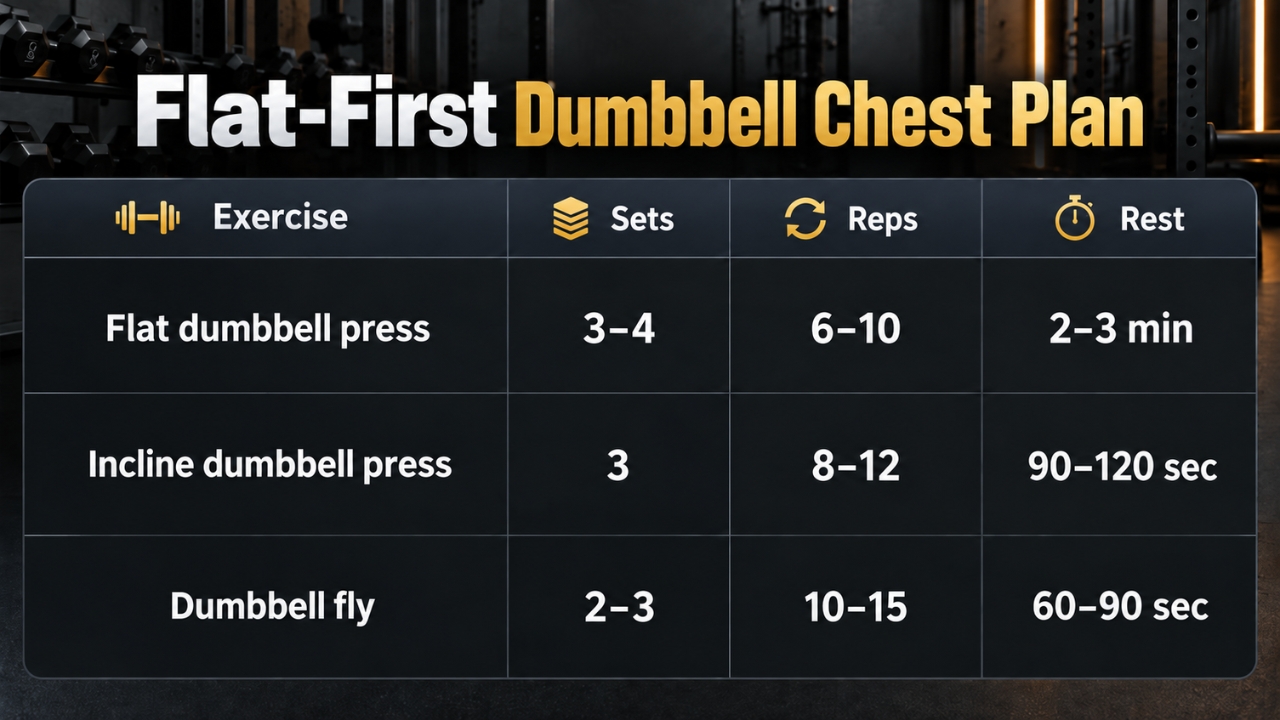
Start the flat press with a weight you can control through a comfortable range of motion. Stop most working sets with roughly one to three good reps left rather than turning every set into a slow-motion emergency.
Once you reach the top of your rep range across your sets with good technique, increase the dumbbell weight.
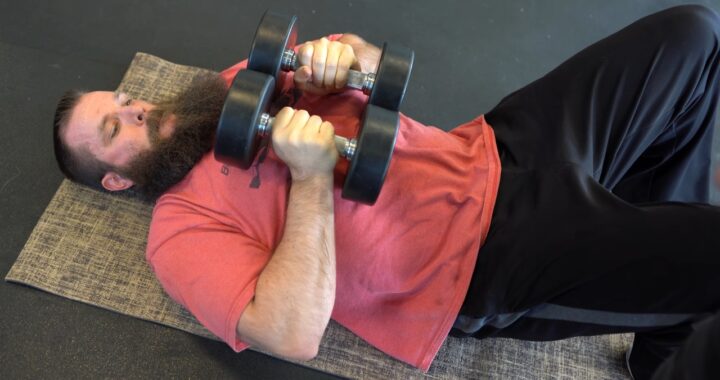
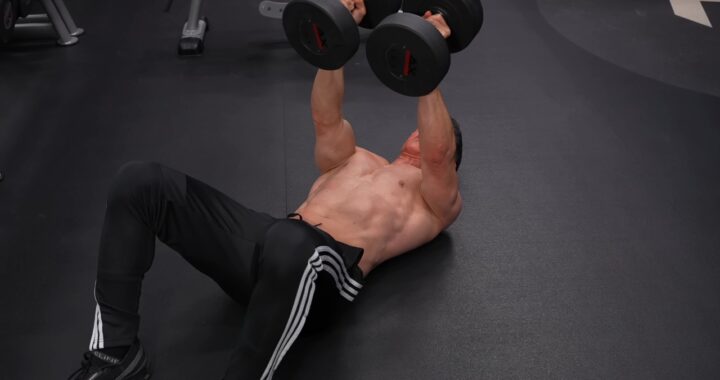
Move up in weight at the next session and start building again. That is progressive overload without needing a spreadsheet containing seventeen colors. Do the same with your incline press. The weight will probably be lower, and that is completely normal. A flat press performed first with poor mechanics won’t become effective simply because it occupies the top line of your workout. We pay particular attention to the lowering phase, elbow movement, and the position of the dumbbells relative to the shoulders. Sit on the bench with the dumbbells resting vertically on your thighs. As you lie back, use your thighs to help guide the weights into the starting position. Keep the movement controlled, particularly with heavier dumbbells. Once positioned: Your upper arms should be able to move without your shoulders rolling forward at the bottom. During the eccentric, or lowering, phase, allow your elbows to move outward and downward at a moderate angle to your torso. An angle around 30–60 degrees is a reasonable starting reference, although individual shoulder anatomy and grip preference affect the most comfortable position. We generally avoid forcing the elbows directly outward into a straight line with the shoulders. As the weights descend, keep your wrists reasonably stacked over your elbows. The dumbbells should travel toward the outer chest, with your forearms remaining close to vertical when viewed from the front. Lower until you reach a controlled, comfortable chest stretch. Your available range of motion depends on shoulder mobility, arm length, and control. If the bottom position feels unstable, the dumbbell floor press gives your upper arms a defined stopping point. As you begin the concentric phase, drive your upper arms back toward the center of your chest while extending your elbows. The dumbbells can travel slightly inward as they rise. There is no need to force them into a perfectly vertical path. Keep your upper back stable against the bench and avoid lifting your shoulders toward your ears to finish the repetition. At the top, straighten your arms comfortably without deliberately crashing the dumbbells together. Forcing the weights into each other adds little value and can interrupt your control. The goal is a repeatable movement with meaningful tension through the chest and triceps. If you train without an adjustable bench, our dumbbell chest workout without a bench explains how to organize effective pressing work on the floor. Flat-first is our general recommendation, but exercise order should reflect training priorities. There are several situations where we’d place incline pressing first. Upper-chest development is the priority. If you specifically want to improve your incline press and emphasize the clavicular portion of the pecs, giving it your freshest effort is sensible. The incline position is more comfortable. Shoulder comfort varies with bench angle, elbow position, and individual anatomy. A low incline may feel better than flat pressing for some lifters. Persistent or sharp shoulder pain warrants professional assessment rather than pushing through it. Your main strength target is the incline press. If improving your incline numbers matters most, train that lift early enough to perform it well. We also recognize the importance of preference. A movement you enjoy and consistently progress has a clear place in your program. For mixed chest development, you can alternate which press receives priority across training sessions, provided you can recover from the total workload. You can develop your chest with either pressing variation. The flat dumbbell press trains the entire pectoralis major, including its upper region. Incline pressing also involves substantial portions of the chest beyond the clavicular fibers. We like including both because they offer different pressing angles and make it easier to distribute chest training across a session or week. For someone training twice a week, a practical arrangement is to prioritize flat pressing during one workout and incline pressing during the other. For beginners, though, mastering one pressing variation and progressing consistently is a perfectly reasonable approach. Add the second when it serves a clear purpose and fits your recovery capacity. For a general dumbbell chest workout, start with the flat dumbbell press. Give it your highest-quality sets, track your repetitions, and work toward gradually increasing the weight. Follow with a low-incline press to add training volume and greater upper-chest emphasis. Our preference is straightforward: make the flat dumbbell press your main lift, use incline pressing to complement it, and focus on improving the actual repetitions. A consistent bench setup, controlled lowering phase, comfortable elbow path, and sensible progression matter far more than searching for the perfect pressing angle every week.
Technique Still Matters More Than the Order
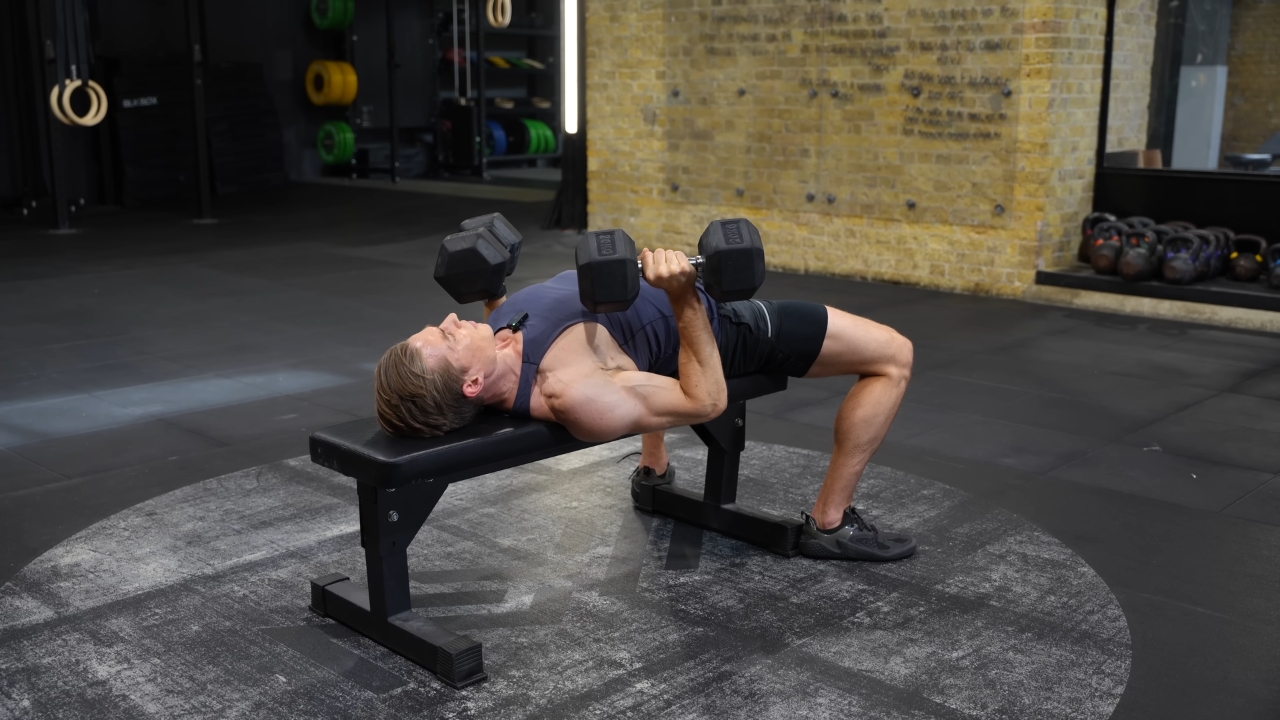
Set Your Shoulders and Feet Before Pressing
Lower the Dumbbells With Your Elbows Slightly Tucked
Press Upward While Maintaining Your Arm Path
When Incline Pressing Should Come First
Flat-first is our default recommendation. It is not a law.Do You Need Both Flat and Incline Dumbbell Presses?
Flat First, Incline Second