A good chest workout doesn’t require a bench. A pair of dumbbells, enough floor space to lie down, and a sensible approach to exercise selection can take you a surprisingly long way.
The dumbbell floor press is our starting point. It allows you to load your chest, triceps, and front deltoids without the equipment needed for conventional bench pressing. The tradeoff is a shorter range of motion, particularly at the bottom of the lift, where your chest would normally experience more stretch.
We can work around that limitation. Push-ups performed on stable dumbbell handles provide additional pressing depth, while squeeze presses and light floor flies give us options for accumulating more chest work.
Our preference is to keep the workout focused on four exercises, make each one earn its place, and track progress over time.
The Bench-Free Dumbbell Chest Workout
You need a pair of dumbbells and enough floor space to lie down.
| Exercise | Sets | Reps | Rest |
| Dumbbell floor press | 3 | 6–10 | 2–3 min |
| Dumbbell squeeze floor press | 3 | 10–15 | 90–120 sec |
| Dumbbell-handle push-up | 2 | 8–20 | 90 sec |
| Dumbbell floor fly | 2 | 12–20 | 60–90 sec |
That’s 10 working sets, with the heaviest pressing exercise coming first.
The 2026 ACSM resistance-training guidance identifies approximately 10 weekly sets per muscle group as a useful target for hypertrophy. Individual needs vary, and beginners can make progress with less.
If you’re relatively new to dumbbell training, start with two sets per exercise. That gives you eight working sets while you learn the movements and establish how much volume you can recover from.
We also recommend performing a few lighter warm-up sets before your first heavy floor press.
1. Start With the Dumbbell Floor Press
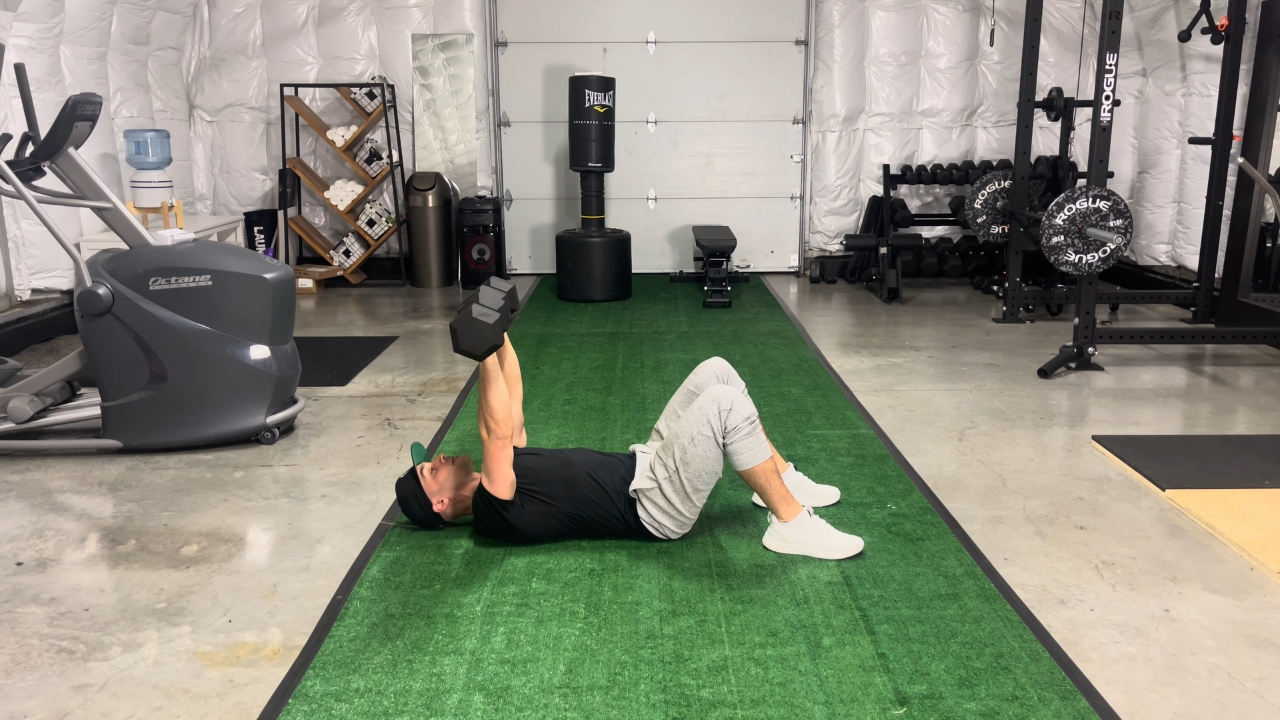
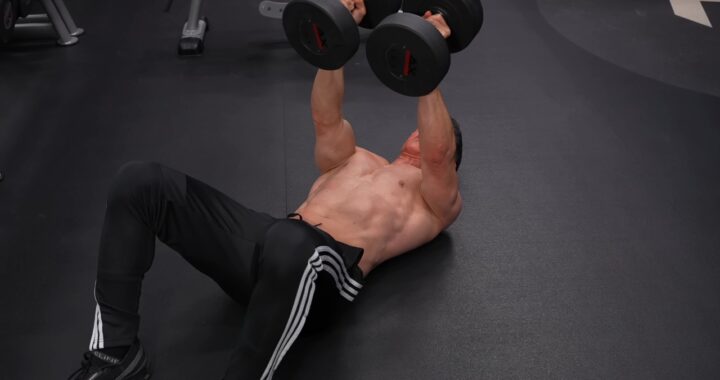
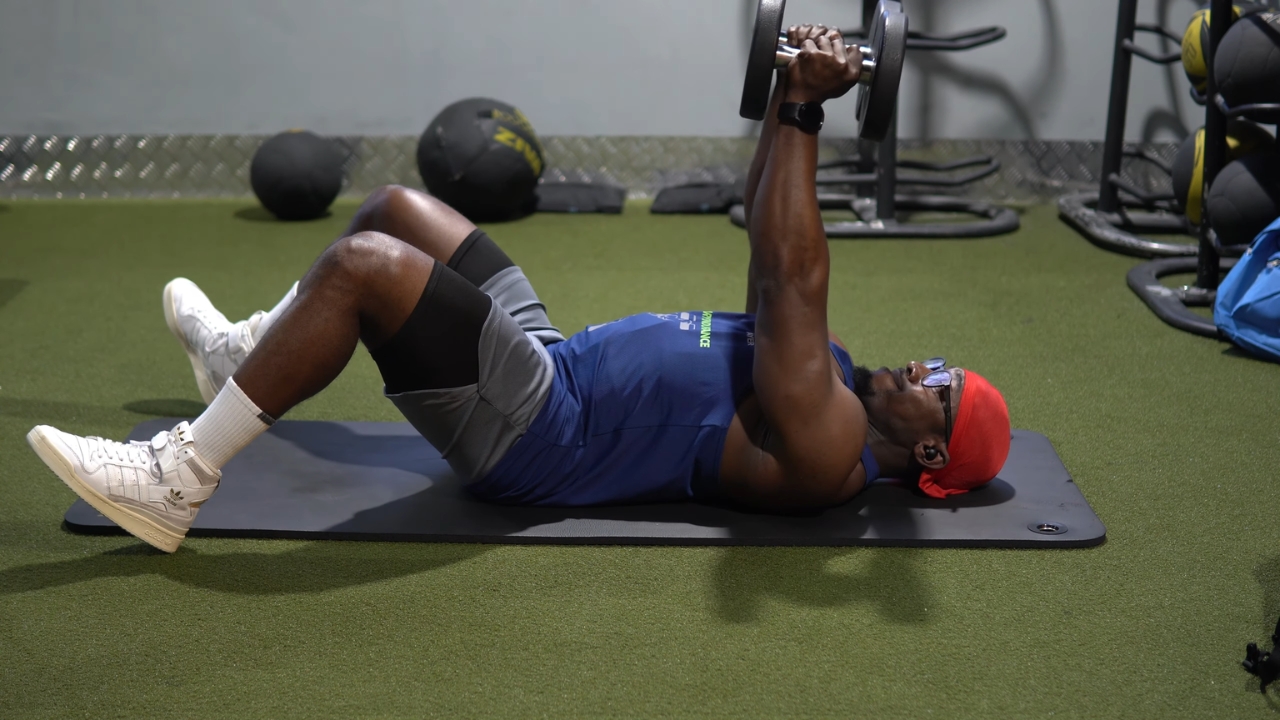
The dumbbell floor press is the main strength exercise in this workout.
It gives you a stable pressing position and a consistent stopping point at the bottom of each repetition. You can concentrate on producing force through your chest and arms without worrying about how far your elbows should travel below a bench.
Here’s how we perform it:
- Sit on the floor with your dumbbells resting near your thighs.
- Carefully bring the weights into position as you lie back.
- Bend your knees and place your feet flat on the floor.
- Position your upper arms roughly 30–60 degrees away from your torso, with your forearms close to vertical.
- Press the dumbbells upward over your chest.
- Lower them until your upper arms gently contact the floor.
- Press upward again without bouncing your elbows.
Your wrists should remain relatively straight, with the dumbbells stacked over your forearms.
We generally prefer a neutral or semi-neutral grip, especially when someone is still learning the exercise. It tends to make finding a comfortable elbow position easier.
At the bottom, the floor should stop your upper arms naturally. Avoid forcing your shoulders backward to manufacture extra depth.
How Heavy Should You Go?
Choose dumbbells that allow you to complete six to 10 controlled repetitions while finishing with approximately one or two good reps remaining.
We want the final repetitions to require genuine effort without changing how the exercise looks.
Watch for three things as fatigue builds:
- Your forearms should remain reasonably vertical instead of tipping excessively forward or backward.
- Your elbows should follow a consistent path instead of flaring outward as the weights get heavier.
- Both dumbbells should rise together without your torso twisting to assist one side.
When those mechanics deteriorate, the set has reached its useful limit.
Why We Put It First
The floor press is the easiest exercise in this workout to load progressively.
It also exposes an important limitation of floor-based chest training. Your upper arms contact the ground before the chest reaches the more lengthened position available during a deep dumbbell bench press.
That shorter range may feel more comfortable for some shoulders, although it doesn’t guarantee that the exercise will be pain-free.
For us, the floor press earns its position through stability, manageable loading, and straightforward progression. We’ll use another exercise later to introduce additional pressing depth.
2. Use the Squeeze Press for More Chest Work
@totalbodytraining 😃This is how to Dumbbell Squeeze Press in 60 Seconds. the Dumbbell Squeeze Press is an excellant chest exercise. This specific version is a Dumbbell Floor press Squeeze Presss Variation. I think this is an excellant exercise to do if you don’t have a workout bench. I strongly recommend you do this chest exercise that next time you are working out your pectoralis a.k.a pec muscles. #pecs #pecworkout #chestworkout #chest #upperbody #upperbodyworkout #chesttraining #exercisetutorialsforbeginners #exercise #exercisetutorials #chest #homeworkout #howrosqueezepress #squeezepress #dumbbellsqueezepress #fitness #fitspo #workout #strengthtraining #howto ♬ original sound – TotalBodyTraining
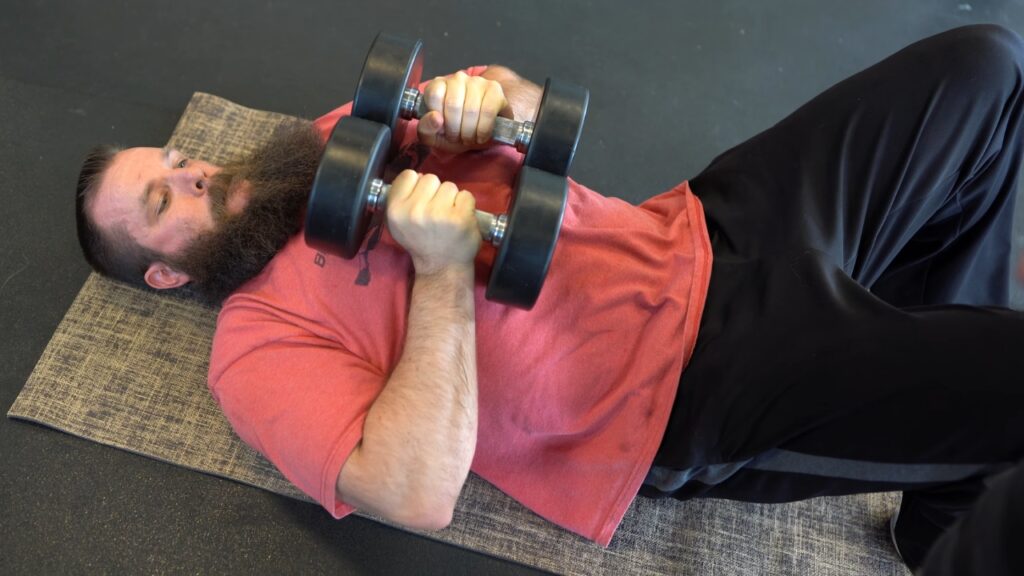
The dumbbell squeeze floor press adds another way to challenge your chest without changing equipment.
Lie on your back as you would for a regular floor press. Bring the dumbbells together over your chest, keeping their inner sides in contact.
As you lower and press, apply inward pressure to keep the weights together.
The pressing motion trains the chest, triceps, and front shoulders. The inward pressure creates an additional isometric demand involving horizontal shoulder adduction, one of the chest’s major functions.
We recommend 10–15 repetitions using moderately light dumbbells.
There are two common mistakes worth avoiding.
First, people sometimes squeeze so aggressively that they struggle to maintain a smooth pressing movement. The dumbbells need consistent inward pressure, not an attempt to crush them together.
Second, the elbows can drift too far outward. Keep your upper arms in a comfortable position and allow your forearms to remain reasonably aligned with the load.
Why It Comes Second
We see the squeeze press as a useful accessory exercise.
The regular floor press already provides substantial mechanical tension, and it’s easier to measure progression through heavier weights.
With squeeze presses, the inward force is difficult to quantify. You can increase repetitions and load over time, but it’s harder to know whether you’re applying the same squeezing force from one session to another.
That’s a reason to keep them in a supporting role.
We also wouldn’t assume that an intense chest contraction automatically means more muscle growth. The sensation of an exercise matters less than the resistance, effort, and progression you can produce consistently.
3. Add Push-Ups to Get Back Some Range of Motion
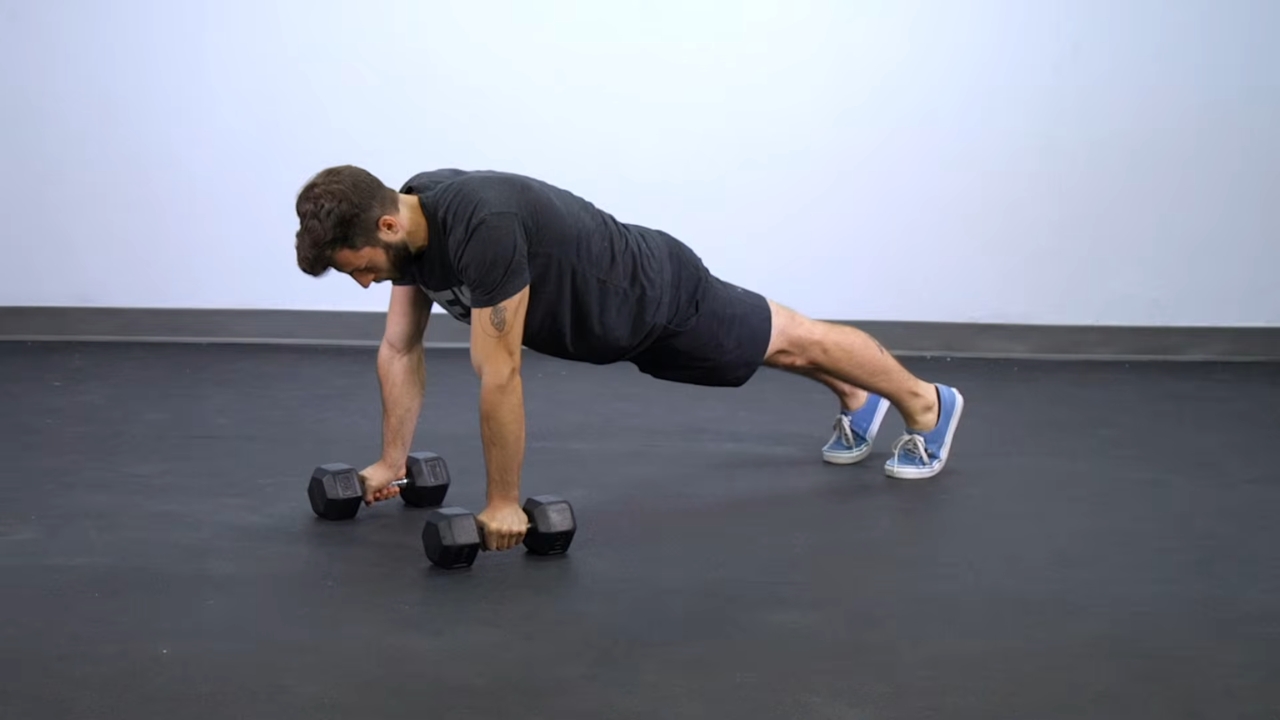
Push-ups are our favorite addition to a bench-free dumbbell chest workout.
A regular floor press stops when the upper arms reach the floor. With push-ups, your shoulder movement is less restricted by that contact point.
Placing your hands on stable dumbbell handles can create even more room for your chest to descend.
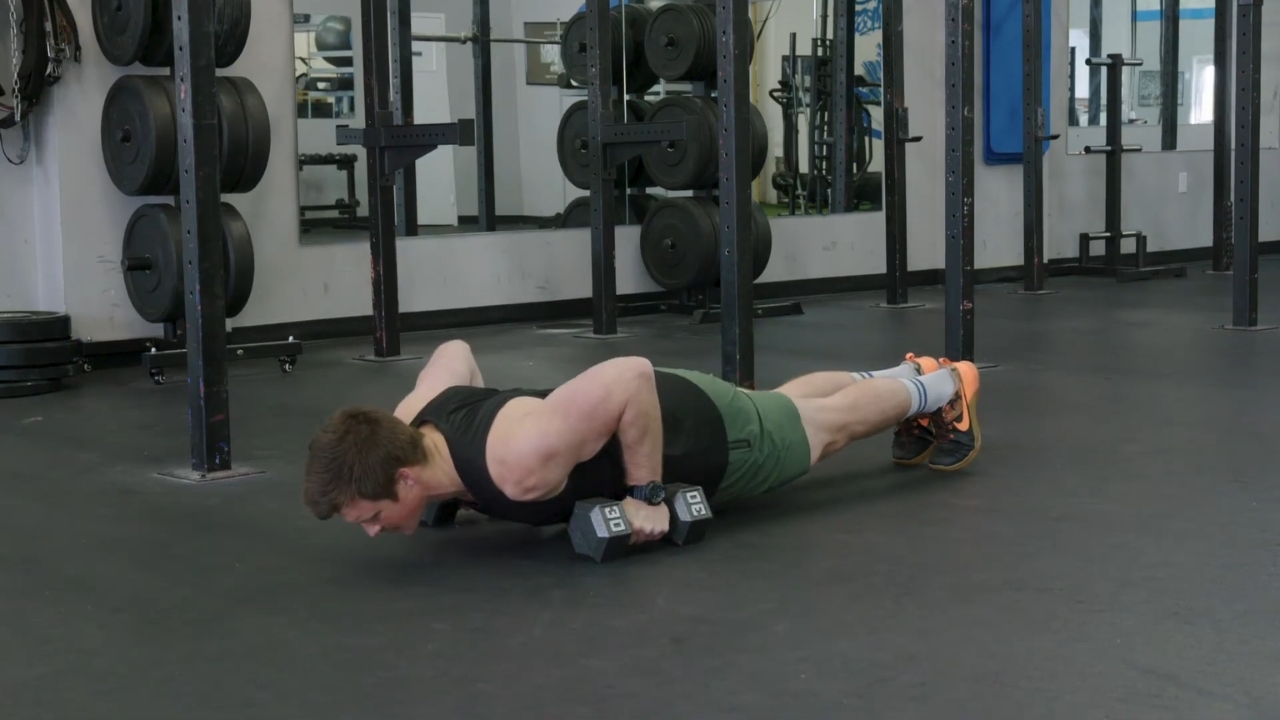
We strongly recommend using hexagonal dumbbells that sit securely on a nonslip surface. Round dumbbells can roll, making them unsuitable as push-up handles.
If your dumbbells aren’t completely stable, perform regular push-ups with your hands directly on the floor.
For dumbbell-handle push-ups:
- Position two stable dumbbells approximately shoulder-width apart.
- Grip the handles and extend your legs behind you.
- Keep your torso and pelvis aligned.
- Lower your chest between the dumbbells while allowing your shoulder blades to move naturally.
- Press upward until your arms are straight, without letting your lower back sag.
Your elbows should travel diagonally backward rather than pointing straight out to the sides.
We also prefer allowing the shoulder blades to move around the rib cage as you press upward. Trying to keep them permanently pinned together interferes with the natural mechanics of a push-up.
Don’t Chase Depth Blindly
A deeper push-up can expose your chest to a greater range of motion, including a more lengthened position.
That’s useful when you can control it comfortably.
Your shoulders still determine how far you should descend. If the bottom position causes pinching, pain, or instability, shorten the range.
We’d rather see 12 controlled push-ups through a comfortable range than eight repetitions performed with the shoulders pushed beyond what they can tolerate.
How Hard Should the Sets Be?
Aim to finish your push-up sets with approximately one or two repetitions remaining.
A systematic review of proximity to failure found no clear hypertrophy advantage from taking every set to momentary muscular failure compared with training that stops short of it.
That fits our approach. Make your sets challenging enough to stimulate adaptation while preserving good technique.
If you cannot complete eight standard push-ups, try an incline variation with your hands on a sturdy elevated surface.
Once 20 repetitions become easy, make the exercise harder. Feet-elevated push-ups are one option, provided you can maintain control. Adding resistance safely is another.
4. Finish With Light Dumbbell Floor Flies
View this post on Instagram
The floor fly is our optional finishing exercise.
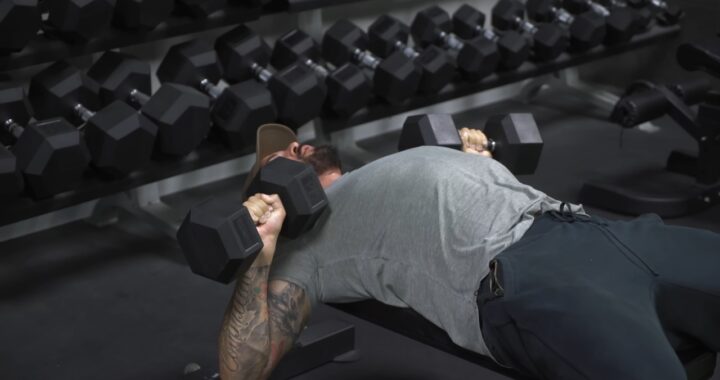
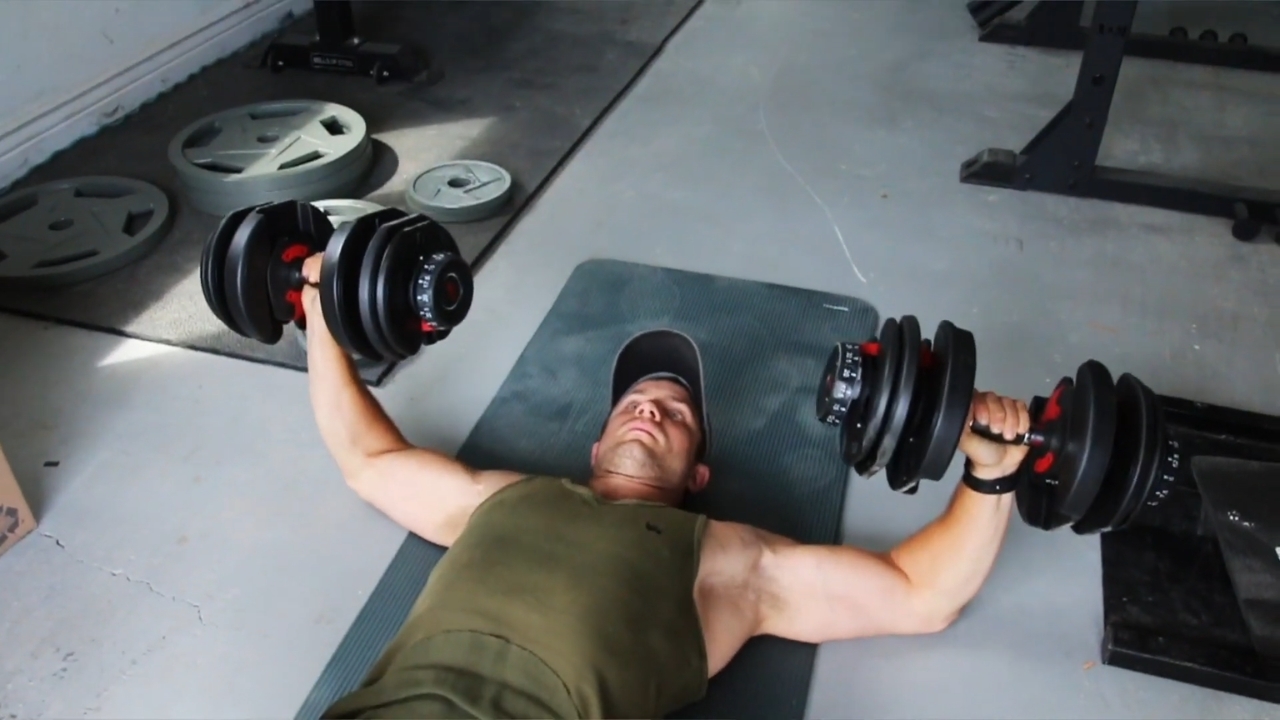
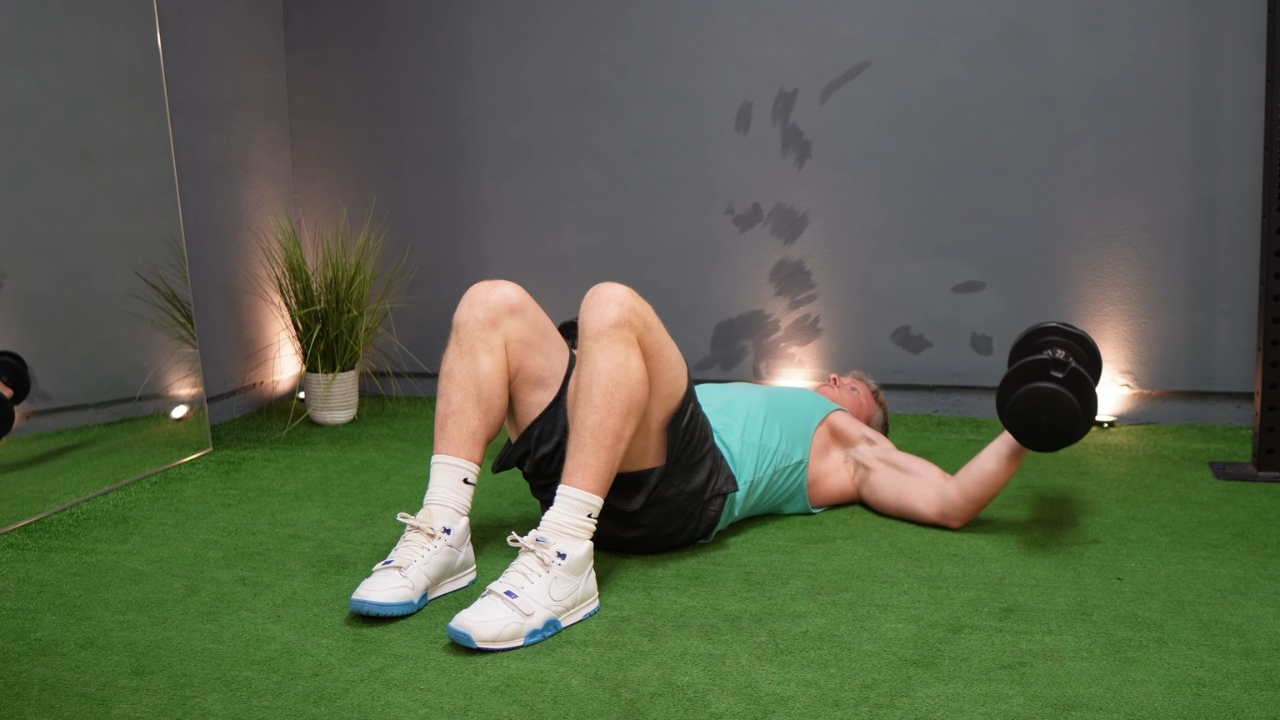
It trains the chest through horizontal shoulder adduction, bringing your upper arms inward toward the center of your body.
Start by lying on your back with the dumbbells above your chest and a slight bend in your elbows.
Open your arms outward in a controlled arc until your upper arms gently contact the floor. Then bring the weights together over your chest, maintaining approximately the same elbow bend.
Use light dumbbells for 12–20 repetitions.
Keep the movement controlled and avoid turning the fly into a press by bending and straightening your elbows substantially during each repetition.
The Floor Actually Helps Here
A dumbbell fly performed on a bench can place significant demands on the shoulder in a deeply stretched position.
The floor restricts how far your arms can descend, which can make the movement easier to manage.
Of course, that restriction also removes some of the range where a conventional fly places the chest under substantial tension.
We don’t consider floor flies essential for chest development. Their value is mostly in providing additional work with lighter weights.
If you find them uncomfortable or awkward, add another set of push-ups or squeeze presses instead.
There’s little reason to force an accessory movement when another exercise can accomplish the same programming goal more comfortably.
Why the Dumbbell Chest Workout Uses Different Rep Ranges
Exercise selection and repetition ranges should work together.
We use six to 10 repetitions for the floor press because the movement is stable enough to handle relatively heavy dumbbells.
The squeeze press and floor fly receive higher repetitions because their mechanics are easier to maintain with lighter resistance.
Push-ups fall somewhere in the middle, depending on your body weight and strength.
Research supports this flexibility.
A systematic review comparing training loads found that both lighter and heavier resistance training can produce similar muscle growth when sets are performed with sufficient effort. Heavier loading generally provides greater benefits for maximal strength.
That means a productive chest workout doesn’t require every exercise to use the same repetition range.
We still recommend keeping your sets practical. When a dumbbell is so light that you’re completing 40 effortless repetitions, you may be better served by choosing a more challenging exercise variation.
How to Progress the Dumbbell Chest Workout
Our main recommendation is to use double progression.
Choose a repetition range, maintain the same weight, and gradually increase your repetitions until you reach the top of that range across every prescribed set.
For example, your floor press might look like this:
- Set 1: 10 reps
- Set 2: 9 reps
- Set 3: 8 reps
These numbers are illustrative. Progress doesn’t have to happen every week.
Once you can complete three sets of 10 repetitions with consistent technique and the intended effort, increase the weight.
Your repetitions might drop back to six or seven. Build them up again.
Apply the same general principle to your squeeze presses and flies.
For push-ups, you can increase repetitions before progressing to a more demanding variation.
We recommend recording at least your weights and repetitions. That simple habit makes it much easier to distinguish genuine progress from a workout that merely felt difficult.
What If Your Dumbbells Are Too Light?
Home training sometimes reaches a point where your available dumbbells no longer provide enough resistance for an exercise.
You have several ways to keep progressing.
Increase repetitions first. Sets of 15–25 repetitions can still be productive when they finish sufficiently close to your muscular limit.
If that stops being practical, consider these adjustments:
- Use controlled eccentrics. Take approximately two or three seconds to lower the dumbbells, particularly if you’ve been allowing gravity to do most of the work.
- Add a brief pause. Pause when your upper arms contact the floor to remove momentum before pressing.
- Experiment with 1½ repetitions. Complete a partial repetition followed by a full repetition to increase the work performed within each set.
- Add another working set. Additional volume can provide more stimulus when your loading options are limited.
- Progress your push-ups. A harder push-up variation may challenge your chest more effectively than another 30-repetition floor press.
We wouldn’t automatically make every repetition extremely slow. A controlled tempo helps maintain technique, but deliberately extending repetitions to excessive lengths offers no established hypertrophy advantage.
For more context, our article on light dumbbells and muscle growth explains why sufficiently demanding sets can remain effective even with relatively modest resistance.
Rest Longer Than You Think You Need
We recommend resting two to three minutes between heavy floor-press sets.
When you’re pressing challenging dumbbells, adequate recovery helps maintain repetition quality and performance.
Rushing back into another set after 30 seconds can leave your triceps, shoulders, and cardiovascular system fatigued before your chest has received the work you’re aiming for.
A 2024 systematic review of rest intervals suggested a small muscle-growth benefit from resting longer than 60 seconds. The review found little evidence of further hypertrophy benefits beyond approximately 90 seconds, although longer breaks can still be useful for maintaining performance during demanding sets.
Our practical approach is simple:
Use longer rests for heavy compound pressing and somewhat shorter breaks for lighter accessory movements.
If your repetitions fall sharply between sets despite consistent effort, insufficient rest may be contributing.
We’ve also covered this in our article on longer rest periods for heavy dumbbells.
How Often Should You Do This Workout?
For most people, training the chest once or twice per week can work well, depending on their overall routine and recovery.
If this is your only dedicated chest workout, the full 10-set session provides a substantial amount of weekly work.
If you’re training your chest twice weekly, we’d reduce the session volume initially.
Two sets per exercise would provide eight sets per workout and 16 total weekly sets. That’s already a meaningful amount of training for many people.
We would also leave enough time between demanding chest sessions to recover and maintain good performance.
Remember that other exercises contribute to your overall workload. Shoulder presses, push-ups, and certain triceps movements can add fatigue to the muscles involved in chest pressing.
For a balanced upper-body routine, include pulling exercises such as single-arm dumbbell rows. They train the back and provide a useful counterbalance to pressing-focused sessions.
Our 3-day dumbbell workout also provides a straightforward way to distribute your training across the week.
Common Mistakes With Floor-Based Dumbbell Chest Workouts
A relatively simple workout leaves fewer opportunities for complicated programming mistakes. Execution still matters.
1. Turning Every Exercise Into Another Floor Press
Changing your grip slightly doesn’t automatically create a meaningfully different chest exercise.
We want each movement to serve a purpose.
The regular floor press provides progressive loading. The squeeze press adds another pressing stimulus. Push-ups offer greater potential depth, and flies provide optional accessory work.
Adding three more pressing variations with nearly identical mechanics is unlikely to improve the workout substantially.
2. Bouncing Your Elbows
Your upper arms should touch the floor gently during every floor press repetition.
Slamming them down to generate momentum increases impact and reduces your control over the movement.
We recommend a brief, controlled transition before beginning the next press.
Also pay attention to your setup and exit. Don’t drop dumbbells above your body or attempt to wrestle dangerously heavy weights into position.
3. Stopping Sets Too Early
Light dumbbells can be effective, but the resistance must create a meaningful challenge.
If you finish a set of 15 repetitions and could comfortably complete another 15, that set probably isn’t providing much hypertrophy stimulus.
Our preference is to begin with roughly two or three good repetitions in reserve, gradually learning to recognize how hard a productive set should feel.
The final repetitions should require effort without losing control of the dumbbells.
4. Adding Exercises Instead of Progressing Them
A familiar workout can feel less exciting after several weeks.
That doesn’t mean it has stopped working.
Before adding exercises, look at your training record. Are you lifting heavier dumbbells? Completing more repetitions? Performing the same repetitions with better control?
Those are the improvements worth pursuing.
We’d rather see steady progress across four exercises than constant variation without any measurable improvement.
Do You Eventually Need a Bench?
You can build considerable chest strength and muscle without a bench.
An adjustable bench does, however, expand your exercise options.
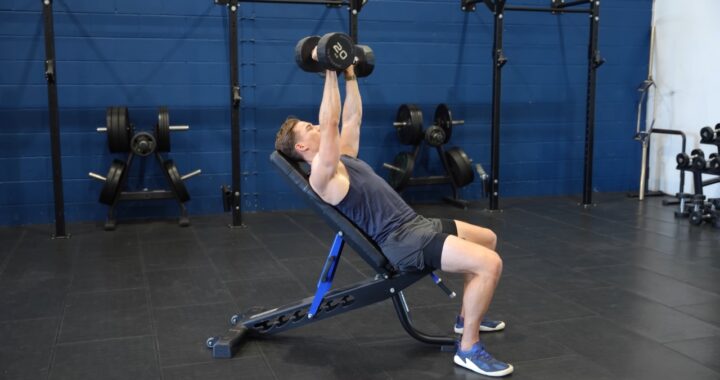
It allows conventional dumbbell presses through a greater range of motion, supported fly variations, and incline pressing.
Incline pressing can be particularly useful when you want to emphasize the clavicular portion of the pectoralis major.
We generally prefer beginning with a relatively low incline. Our incline dumbbell press guide explains how bench angle influences the movement and why excessively steep inclines may shift more work toward the front deltoids.
Still, buying a bench shouldn’t become a prerequisite for getting stronger.
If your current floor presses and push-ups remain challenging, you have plenty of room to progress.
The 2026 home dumbbell strength guidelines also reinforce the broader point that effective resistance training is possible without conventional gym equipment.
We’d prioritize heavier adjustable dumbbells or a stable bench when your existing equipment begins genuinely restricting the exercises and loading you want to perform.
The Bottom Line
A bench-free dumbbell chest workout can provide plenty of productive training when the exercises are selected sensibly.
Our preferred combination is straightforward: regular floor presses for heavier loading, squeeze presses for additional chest work, push-ups for greater pressing depth, and optional floor flies for lighter accessory volume.
The floor press has a shorter range of motion, and we think that’s worth acknowledging. It remains an effective way to train your chest at home, especially when paired with other movements.
Use weights that genuinely challenge you, keep your elbows and wrists in comfortable positions, allow enough rest between sets, and record your progress.
Then give the workout time to work.
Four exercises performed consistently and progressed intelligently can accomplish a great deal.