
Ten weeks away from strength training can leave your muscles smaller and familiar dumbbells feeling unexpectedly heavy. A 2024 resistance training study offers useful perspective: participants recovered their pre-break strength and muscle size after about five weeks of retraining.
Our takeaway is straightforward. Training interruptions have measurable costs, and returning lifters often recover faster than they expect. The smartest response is a controlled restart.
What Happened During the 10-Week Training Break?

Researchers at the University of Jyväskylä recruited previously untrained adults for supervised resistance training. Forty-two participants completed the study. Everyone trained their whole body twice weekly during their assigned training periods.
The study compared two schedules:
- Continuous training: Ten weeks without resistance training, followed by 20 consecutive training weeks.
- Interrupted training: Ten training weeks, a ten-week break, and another ten training weeks.
Each group therefore completed 20 weeks of lifting across a 30-week study. The difference was the placement of the training interruption. Researchers tested leg press and biceps curl strength, thigh and biceps muscle size, and vertical jump performance.
The interrupted group’s results declined during the ten weeks off:
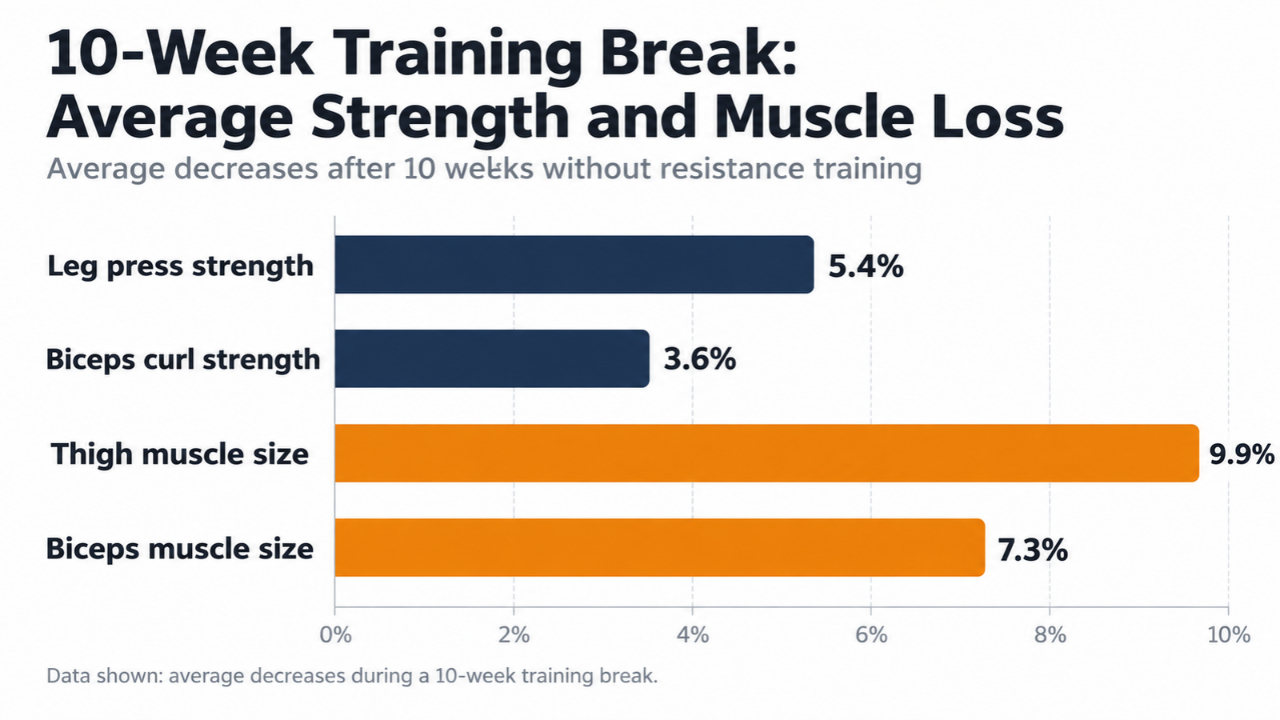
Those losses matter. Nearly 10% less measured thigh muscle cross-sectional area is substantial. Yet five weeks after restarting, the interrupted group had recovered to levels statistically comparable with its pre-break measurements. By the end, the two groups had achieved similar improvements from their respective baselines.
We consider that a compelling argument against panic after time off. It is also a reminder that the study compared equal amounts of actual training, spread across different calendars.
Testing took place at five-week intervals, so researchers could not pinpoint the exact workout when each measure recovered. Individual participants also varied. We would treat five weeks as a useful reference when planning a return, then let current performance and recovery determine the pace.
These group averages are useful for planning and unsuitable as targets to chase in your first workouts back.
You Can Lose Muscle Without Losing Everything You Built

Muscle size declined more sharply than maximal strength in this experiment. That distinction matters whenever someone returns to dumbbells after several inactive weeks.
Strength reflects muscle tissue, nervous system adaptations, coordination, and familiarity with an exercise. A practiced movement can remain recognizable even when the muscles performing it have become smaller.
Consider the dumbbell Romanian deadlift. Regular practice teaches you to shift your hips backward, keep the weights close, and brace your torso. Those skills can make the first returning sessions easier to organize, although the weights and repetitions may need adjusting.
Our dumbbell Romanian deadlift guide emphasizes the hip hinge because it determines which joints do the work. We would spend the first few sessions checking that movement pattern under light loads before testing heavier weights.
We think this is an overlooked benefit of learning exercises properly. Technical familiarity gives returning lifters a practical starting point. It still takes a little repetition to restore timing, stability, and confidence.
Check the hinge from the side with light dumbbells. The hips should travel backward with softly bent knees. We would prioritize a steady torso and comfortable range of motion, increasing depth only while control remains reliable.
Muscle Memory Is Real, but It Isn’t Magic
View this post on Instagram
“Muscle memory” describes the tendency to regain previously developed adaptations during retraining. Researchers have proposed retained motor learning, changes in muscle-cell nuclei, and epigenetic mechanisms as possible contributors.
The explanation remains unsettled. This experiment measured training outcomes; it did not directly test those proposed biological mechanisms.
Our interpretation is deliberately narrow. The participants regained earlier strength and size within approximately five weeks. That finding supports the usefulness of retraining and says little about how quickly an individual experienced lifter will recover.
We would also resist treating ten weeks off as a clever muscle-building strategy. The interrupted group spent that time losing some of its gains. Its later recovery does not establish that planned layoffs improve long-term progress.
The participants were relatively young adults with little previous resistance-training experience. Older lifters, highly trained athletes, and people returning after illness or injury may need very different timelines. Five weeks is an observed group-level result, never a deadline to impose on yourself.
How We’d Return to Dumbbell Training After Ten Weeks Off
We would restart with two full-body sessions each week, separated by at least a day of recovery. For the first two weeks, this simple workout offers enough practice and manageable volume:
| Exercise | Sets | Reps |
| Goblet squat | 2 | 8–10 |
| Dumbbell Romanian deadlift | 2 | 8–10 |
| Dumbbell floor press | 2 | 8–12 |
| Single-arm dumbbell row | 2 | 10 each side |
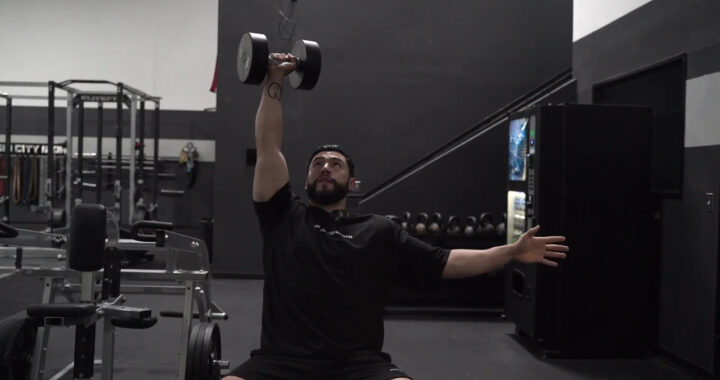
| Dumbbell overhead press | 1–2 | 8–10 |
Start below your old working weights. Finish most sets with roughly three or four repetitions in reserve. Those extra reps provide room to assess coordination, joint comfort, and recovery.
We especially like the dumbbell floor press here. The floor gives the upper arms a repeatable stopping point. Lower them gently, pause briefly, and press without bouncing your elbows into the ground.
With single-arm dumbbell rows, keep your torso stable and drive the elbow toward your hip. A twisting, heaving repetition tells us the weight should come down.
These are proposed starting doses, based on practical programming judgment. The Finnish study used supervised gym exercises, including leg presses and barbell curls. It did not test this particular dumbbell routine.
How We’d Progress Over the Following Weeks
We wouldn’t follow an aggressive schedule that forces heavier dumbbells every session.
We would judge progress through three simple checks:
- Technique: Are repetitions controlled through a comfortable range of motion?
- Recovery: Has soreness settled enough for the next scheduled session?
- Performance: Can you complete extra repetitions while keeping the same movement quality?
When those signs improve, add repetitions first, then consider increasing the dumbbells or adding a set. We prefer measured adjustments because dumbbell weight jumps can represent a large percentage increase.
Some people can return to three sessions weekly after the initial adjustment. Our simple 3-day dumbbell workout gives that progression a clear structure.
Keep two sessions if soreness or fatigue is interfering with performance. Adding a third workout before you can recover from the second creates problems we can easily avoid.
The Biggest Mistake Is Trying to Make Up for Lost Time
Our strongest objection is to catch-up training. Lifters return, remember their best numbers, and immediately combine heavy loads with extra sets and failure training. The result is often severe soreness and another avoidable interruption.
Ten missed weeks cannot be recovered through one punishing workout. We would rather see repeatable sessions built around accurate current performance.
For heavier movements, take enough rest between dumbbell sets to preserve rep quality. Rushing rest intervals while rebuilding strength adds fatigue without a clear benefit.
We also recommend recording your first session back as a fresh reference point. Note the load, repetitions, and how many solid reps remained. At the next workout, improve one variable only when execution and recovery justify it.
A break caused by injury or illness calls for individual precautions. Symptoms, treatment, and medical guidance take priority over any generic return-to-training schedule. An ambitious calendar should never override recovery.
Consistency Matters More Than a Perfect Training Streak

Consistency remains central to progress, and we define it across months and years. A temporary gap belongs in that longer training history. Work demands, travel, and family responsibilities will occasionally disrupt a perfectly planned routine.
The study offers a useful perspective: participants completing the same amount of training reached similar final outcomes, even when one group spent ten consecutive weeks away from lifting. The findings apply to those participants and that study design. They give us good reason to approach an ordinary training interruption calmly.
Our rule is simple: return with manageable loads, repeat the basic movements, and earn your heavier dumbbells through consistent sessions. Your first week back is a starting measurement, with plenty of room to build.