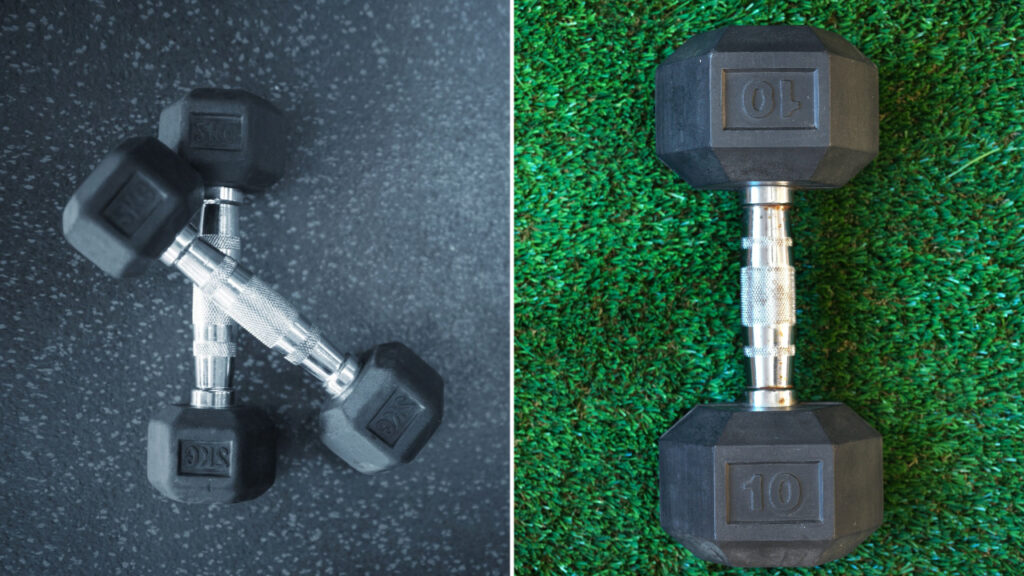
Adding five pounds to a dumbbell sounds like a small progression. For someone curling 15 pounds, however, moving to 20 pounds represents a 33% increase in resistance.
That’s an enormous jump for a relatively small exercise.
We believe standard dumbbell weight increments are one of the most overlooked problems in home strength training. They can push lifters toward heavier weights before they’re ready, particularly during curls, lateral raises, and triceps extensions.
The percentages explain why.
Five Pounds Means Something Different at Every Weight
View this post on Instagram
The relative increase in resistance depends on your starting weight.
| Current Dumbbell | Next Dumbbell | Weight Increase |
| 5 lb | 10 lb | 100% |
| 10 lb | 15 lb | 50% |
| 15 lb | 20 lb | 33.3% |
| 20 lb | 25 lb | 25% |
| 30 lb | 35 lb | 16.7% |
| 40 lb | 45 lb | 12.5% |
| 50 lb | 55 lb | 10% |
Someone moving from 50 to 55 pounds increases the resistance by 10%. Someone moving from 10 to 15 pounds faces a 50% increase.
These calculations refer to the weight of one dumbbell. For a unilateral exercise such as a single-arm curl or row, moving from a 20-pound dumbbell to a 25-pound dumbbell increases the external resistance by 25%.
For exercises using two dumbbells, the percentage remains identical when both weights increase equally. Two 20-pound dumbbells provide 40 pounds of combined external weight. Moving to two 25-pound dumbbells raises that total to 50 pounds, another 25% increase.
These percentages describe changes in dumbbell resistance. They don’t measure the exact increase in muscular force or joint loading, which also depends on exercise mechanics.
We think the fitness industry’s habit of discussing progression exclusively in pounds obscures how demanding these increases can be.
The exercise matters, too. Five additional pounds on a heavy dumbbell row could be manageable. Adding the same amount to a light lateral raise could substantially change your performance.
Why Smaller Exercises Suffer the Most
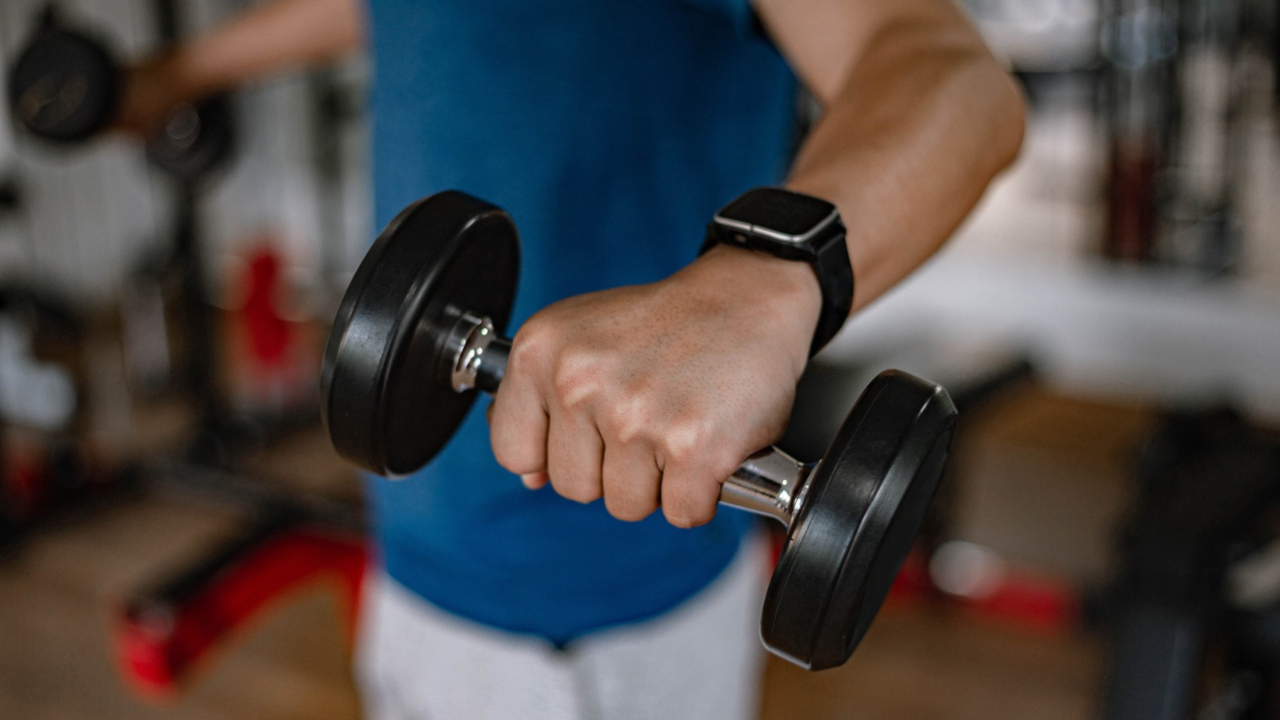
Consider the dumbbell lateral raise.
As your arm rises, the dumbbell generally creates increasing external torque around your shoulder until your arm approaches horizontal. Relatively light weights can therefore produce considerable muscular demands.
Suppose you perform 15 controlled repetitions with 10-pound dumbbells in each hand. Your next available pair weighs 15 pounds per dumbbell.
That’s a 50% increase in external resistance per arm.
For most lifters working at this resistance level, we would consider that an excessively aggressive progression.
The predictable response is often compromised technique. Lifters start swinging their torsos, bending their elbows more, or shortening the movement to complete repetitions.
These adjustments change the exercise’s mechanical demands and make performance comparisons unreliable.
Our position is firm: if adding weight forces you to fundamentally change the movement, you haven’t earned that progression.
Curls and triceps extensions present similar challenges. Larger exercises, such as dumbbell rows and Romanian deadlifts, generally allow heavier absolute loads and more manageable relative increases.
This is why progression needs to be exercise-specific.
Adding Repetitions Is Legitimate Progressive Overload
We strongly disagree with the idea that progressive overload always requires heavier weights.
A 2022 randomized study published in PeerJ compared increasing resistance with adding repetitions over eight weeks. Among 43 resistance-trained participants, both approaches produced muscular adaptations, with broadly similar hypertrophy outcomes.
The study involved lower-body exercises and was relatively short, so its findings shouldn’t be generalized to every movement or training goal.
Still, the practical implication is important. Increasing repetitions can be a productive progression strategy.
Moving from 12 to 16 controlled curls with a 15-pound dumbbell at comparable effort demonstrates improved performance. Our discussion of light dumbbells and muscle growth explains why challenging sets with lighter resistance can also stimulate hypertrophy.
Dismissing measurable repetition improvements because the dumbbell weight hasn’t changed is poor programming.
Our Preferred Method Is Double Progression
For most home dumbbell workouts, we favor double progression.
You establish a repetition range, gradually improve within that range, and increase resistance when your performance supports it.
Consider a dumbbell floor press performed with two dumbbells for three sets of 8–12 repetitions.
| Stage | Weight Per Dumbbell | Repetitions Per Set |
| Starting point | 20 lb | 8, 8, 8 |
| After improvement | 20 lb | 10, 10, 10 |
| Upper target reached | 20 lb | 12, 12, 12 |
| Test heavier dumbbells | 25 lb | 7, 6, 5 |
These numbers are illustrative. Actual performance will vary.
After reaching three sets of 12 with two 20-pound dumbbells, you attempt two 25-pound dumbbells. The combined external weight rises from 40 to 50 pounds, representing a 25% increase.
In this example, your repetitions fall to seven, six, and five. All three sets are below the intended 8–12 range.
The new weight may still provide a useful training stimulus, but it doesn’t fit the progression scheme you’ve established.
We would return to 20-pound dumbbells and build toward 15 repetitions per set before testing 25 pounds again. If 22.5-pound dumbbells are available, that smaller increase would be our preferred option.
We also recommend recording estimated repetitions in reserve. Improvements measured at comparable effort give a clearer picture of progress.
Reaching the top of a repetition range earns you the opportunity to test a heavier weight. It doesn’t guarantee that the next available dumbbell will be appropriate.
Smaller Weight Increments Deserve More Attention
We think adjustable dumbbells with genuinely small weight increments are among the most useful investments for home strength training.
Moving from 15 to 17.5 pounds per dumbbell represents approximately 16.7%, compared with 33.3% when jumping directly to 20 pounds.
Even 2.5-pound increases can be substantial during certain isolation exercises.
This is why we’re skeptical of equipment recommendations that focus almost entirely on maximum weight capacity.
A dumbbell set reaching 80 pounds sounds impressive. Its usefulness also depends on how precisely you can adjust the resistance.
For someone prioritizing shoulder and arm development, smaller increments could be considerably more valuable than another exceptionally heavy pair.
Our review of the 2026 ACSM strength guidelines further discusses matching resistance training to individual goals and capabilities.
What to Do When You Can’t Increase the Weight
Limited equipment requires deliberate programming. We recommend four adjustments.
- Add repetitions. Gradually extend your working range toward 15–20 repetitions while maintaining comparable technique and effort.
- Standardize your range of motion. Perform every repetition through a consistent, appropriate movement range. This makes improvements easier to evaluate.
- Introduce controlled pauses. Brief pauses can reduce momentum and increase the difficulty of exercises such as lateral raises.
- Choose harder exercise variations. Split squats and single-leg Romanian deadlifts can make existing dumbbells more challenging without additional equipment.
Each adjustment serves a particular purpose.
We prefer changing one variable at a time so we can evaluate its effect. Adding repetitions, pauses, and extra sets simultaneously creates unnecessary programming complexity.
We also recognize when heavier equipment becomes necessary. Eventually, your existing dumbbells may provide insufficient resistance for the strength adaptations you’re pursuing.
For beginners, our three-day dumbbell workout offers a straightforward structure for establishing consistent exercises and tracking improvements.
Our Biggest Issue With Forced Weight Progression
@hrms_nova Perfect form > high weight #gym #fitness #gymtok #gymmotivation ♬ original sound – Tune
We strongly disagree with the idea that every successful workout should lead to heavier dumbbells.
Strength adaptations follow individual performance, recovery, and training demands. Equipment manufacturers determine the available weight increments.
Those increments frequently exceed what a lifter can reasonably accommodate.
We would rather see someone perform 18 excellent lateral raises with 10-pound dumbbells in each hand than eight sloppy repetitions with 15-pound dumbbells.
The lighter set demonstrates controlled performance. The heavier set, in this example, introduces compensations that undermine the intended exercise. Progression should be earned through repeatable performance.
Five Pounds Can Be a Major Progression
A five-pound increase per dumbbell can represent anything from a modest adjustment to a dramatic change in resistance.
Our recommendation is simple: consider the percentage increase, track your repetitions, and use consistent technique to evaluate readiness.
The best progression is the one you can perform effectively and build upon over time.