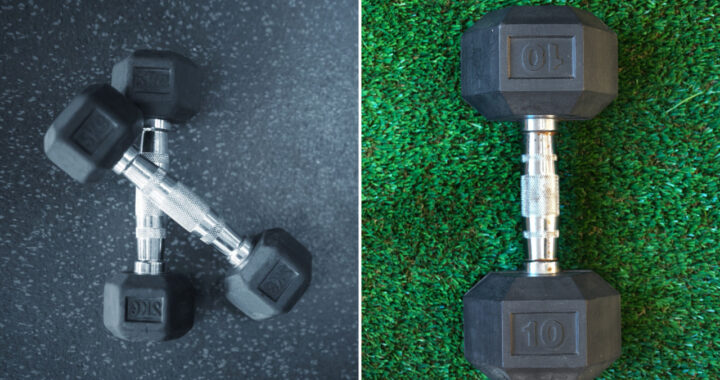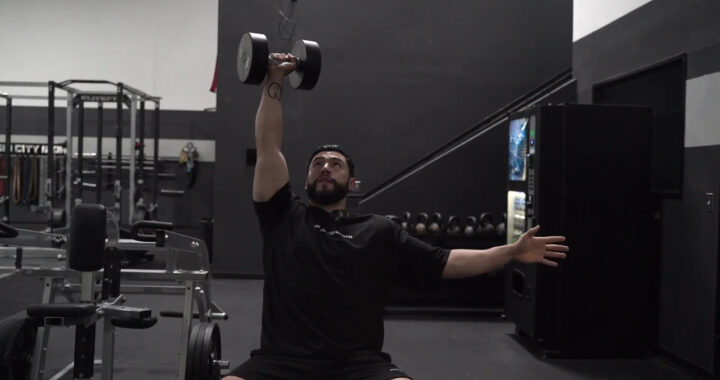
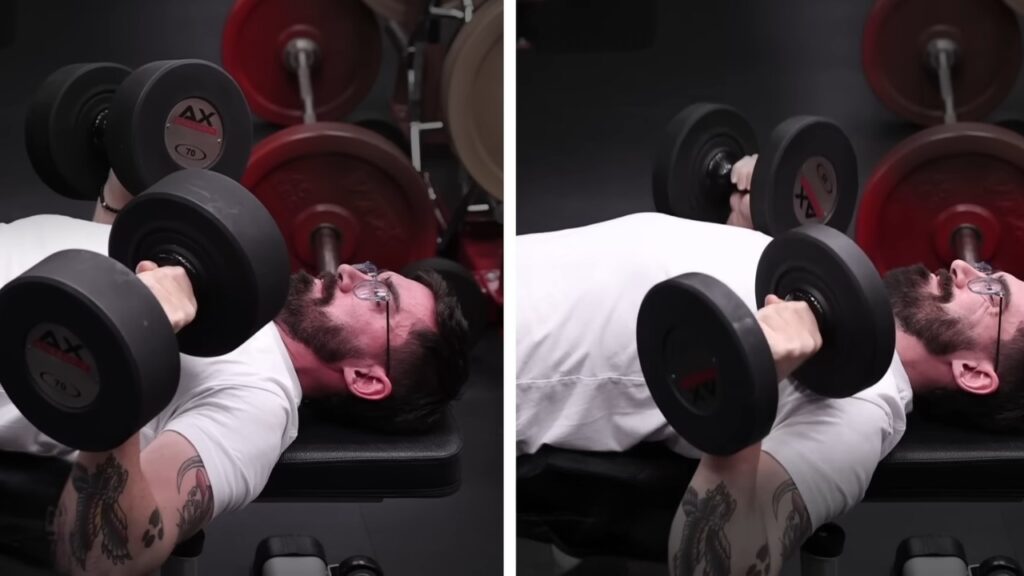
Light dumbbells can produce muscle growth comparable to considerably heavier weights. This finding has appeared repeatedly in resistance-training research, including experiments where participants used loads as low as 30% of their one-repetition maximum.
There is an important condition attached to those results: the lighter sets were performed with substantial effort, often all the way to muscular failure.
We think this research has been interpreted far too generously in some fitness discussions. The findings support a wide range of effective training loads. They certainly don’t establish that any pair of dumbbells will build muscle indefinitely.
For home training, the practical question is straightforward: Can the available weight make the intended muscles work hard enough within a reasonable number of repetitions?
The 2026 ACSM strength guidelines reinforce the value of accessible resistance training, including home workouts. They also distinguish between programming for muscle growth and programming for maximum strength.
That distinction deserves attention.
The Study That Challenged Heavy-Weight Training
A 2016 study published in the Journal of Applied Physiology examined 49 resistance-trained men over 12 weeks.
Researchers assigned participants to two groups using substantially different resistance loads.
| Training Variable | Light-Weight Group | Heavy-Weight Group |
| Load | 30–50% of one-rep max | 75–90% of one-rep max |
| Repetitions | 20–25 per set | 8–12 per set |
| Training duration | 12 weeks | 12 weeks |
| Set intensity | To muscular failure | To muscular failure |
A one-repetition maximum (1RM) represents the heaviest load someone can lift once.
Both groups experienced increases in lean body mass and muscle fiber size. The researchers found no statistically significant differences between groups for those hypertrophy outcomes.
The heavy-weight group improved its maximum bench press strength more, with an average increase of approximately 14 kilograms compared with 9 kilograms in the lighter group.
That strength result matters because muscle size and maximum lifting performance respond somewhat differently to training.
We also need to be precise about the hypertrophy finding. A nonsignificant difference does not establish that two training methods are perfectly equivalent. The experiment demonstrated that both loading approaches could produce substantial growth under the conditions tested.
This Wasn’t an Isolated Finding
An earlier 2012 McMaster University study examined lower-body training using loads around 30% and 80% of maximum strength.
After 10 weeks, researchers reported significant increases in quadriceps muscle volume across the training conditions, without statistically significant differences between groups.
A subsequent meta-analysis of 45 studies supported the broader pattern: lower- and higher-load resistance training produced similar average hypertrophy outcomes, while heavier training generated greater improvements in maximal strength.
Our interpretation is that the conventional 8–12-repetition range has received more authority than the evidence justifies.
It remains a useful programming range because it balances effort, time, and loading. Muscle growth can occur across a much wider range when the training stimulus is sufficient.
We would still hesitate to generalize these findings to extremely light weights, very high repetition counts, or sets that end far from failure. Those conditions introduce practical limitations that deserve consideration.
Why Lighter Dumbbells Can Produce Similar Muscle Growth
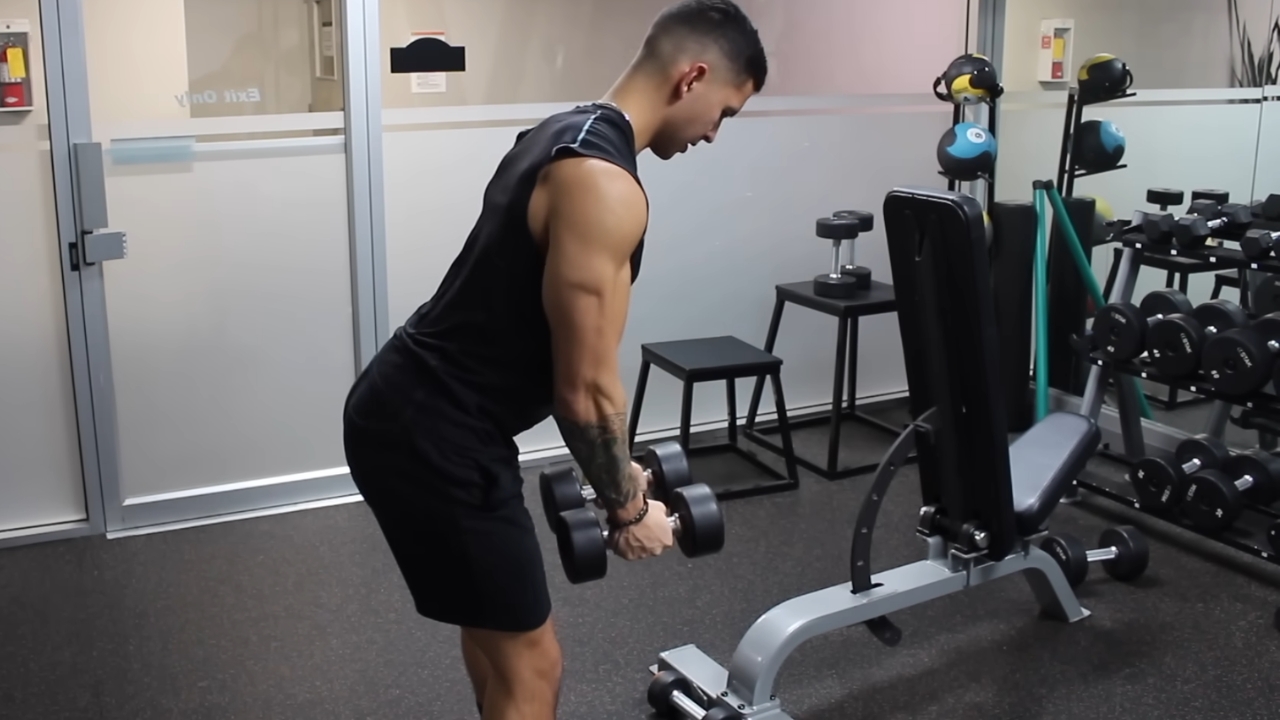
Muscle hypertrophy is strongly influenced by mechanical tension experienced by muscle fibers.
When a muscle contracts against resistance, its fibers generate force. Repeated exposure to sufficiently challenging mechanical loading contributes to the adaptations associated with muscle growth.
A heavier dumbbell demands relatively high force from the beginning of a set. With lighter weights, the relationship between the required force and the muscle’s remaining force-producing capacity changes as fatigue accumulates.
Consider a set of 25 dumbbell curls.
The first several repetitions might feel comfortable. As the set continues, the active muscle fibers become fatigued, and your nervous system adjusts motor-unit recruitment and activation to maintain the movement.
Eventually, repetitions slow, and completing another curl becomes increasingly difficult.
The external load has remained constant throughout the set. The muscle’s available capacity has progressively declined.
This helps explain how a lighter weight can create a meaningful hypertrophy stimulus when a set approaches failure.
However, motor-unit recruitment alone cannot explain every aspect of muscle growth. Fiber tension, exercise mechanics, training volume, and fatigue all influence the outcome.
The Intended Muscle Must Remain the Limiting Factor
This is the detail we consider most important when applying the research.
During a dumbbell curl, the elbow flexors should be responsible for overcoming the resistance. The biceps brachii, brachialis, and brachioradialis contribute to that movement.
As fatigue increases, some lifters begin swinging their torsos, driving their shoulders forward, or shortening their range of motion.
Those adjustments redistribute the muscular demands and make the final repetitions harder to evaluate.
Our rule is simple: Once technique changes enough to shift the work away from the intended muscles, the set has reached its useful endpoint.
We apply the same reasoning to lateral raises, rows, floor presses, and lower-body movements.
Training to Fatigue Doesn’t Mean Stopping When It Burns
High-repetition sets can produce an intense burning sensation because of the metabolic demands associated with repeated muscular contractions.
That sensation provides limited information about how close the target muscle is to failure.
Someone performing 25 curls with a weight they could lift 45 times still has considerable capacity remaining.
Muscular failure generally refers to reaching the point where another complete repetition cannot be performed under the required conditions.
View this post on Instagram
In the studies discussed earlier, participants trained to voluntary failure.
For everyday programming, we generally favor leaving approximately one to three repetitions in reserve during most working sets. This means finishing when you estimate that only one to three additional clean repetitions would be possible.
A 2024 meta-regression found that muscle hypertrophy tended to improve as sets were terminated closer to failure. The researchers also emphasized uncertainty in the precise relationship because proximity to failure had to be estimated from study descriptions.
With lighter loads, we place particular importance on reaching a meaningful level of muscular effort.
Signs of approaching failure include:
- Repetitions becoming noticeably slower despite continued effort.
- Maintaining the intended range of motion becoming increasingly demanding.
- Having only a few technically sound repetitions remaining.
- The targeted muscle becoming the primary reason the set must end.
Even perception can be misleading. Our discussion of a caffeine placebo experiment shows how expectations can influence repetition performance.
We recommend tracking completed repetitions alongside effort and technique. Those observations provide a more useful picture of training progress than burning or soreness alone.
Heavy Dumbbells Still Have an Important Advantage
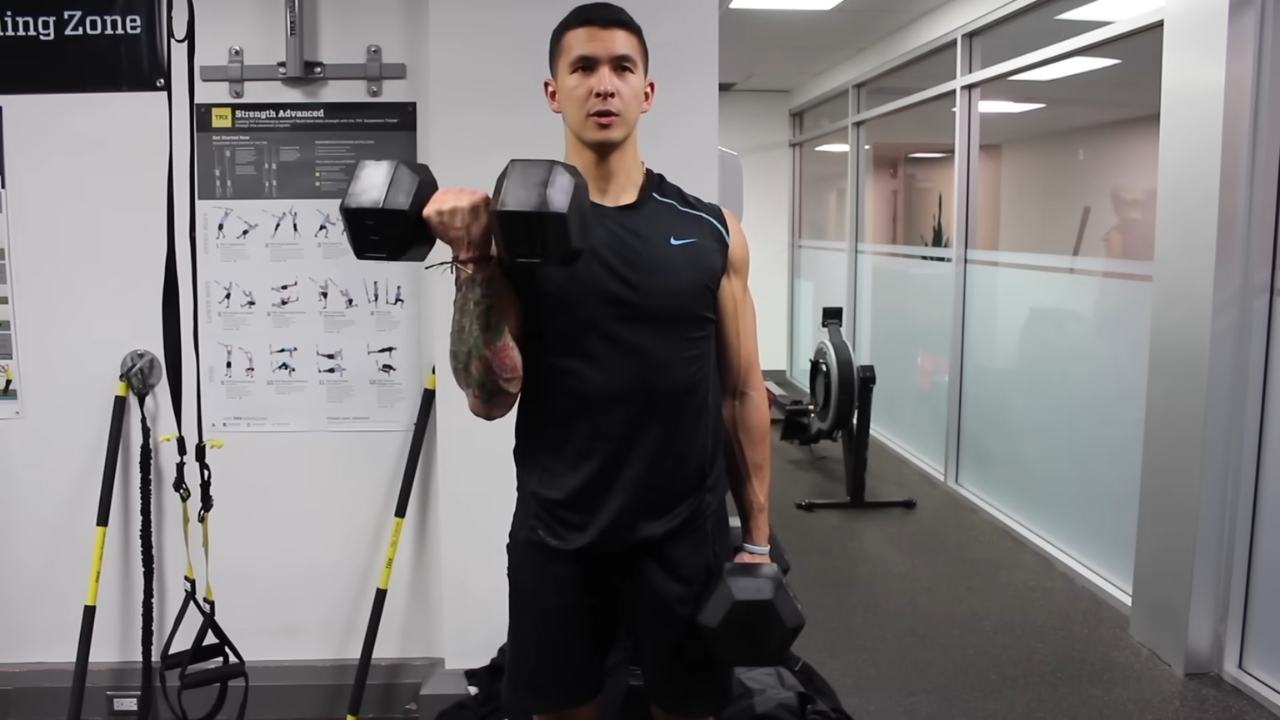
I wouldn’t read this research and throw out every heavy dumbbell. The distinction between muscle size and maximum strength matters.
A network meta-analysis involving 28 studies found no significant differences in hypertrophy between low-, moderate-, and high-load training performed to voluntary failure. However, moderate and heavy loads produced greater maximum-strength improvements than lighter loads.
That makes sense. If you want to lift heavier weights, you need regular practice producing high forces against heavier resistance. Strength also involves coordination and nervous-system adaptations specific to the task.
Heavier dumbbells are generally more time-efficient, too. A challenging set of eight repetitions usually takes less time than grinding through 30.
Where We’d Use Each Approach
| Training Goal | Our Preferred Approach |
| Maximum strength | Heavier dumbbells |
| Muscle growth | Moderate or heavy dumbbells, with lighter options |
| Limited home equipment | Lighter dumbbells taken close to failure |
| Lateral raises and curls | Moderate to lighter dumbbells |
| Heavy rows and Romanian deadlifts | Heavier dumbbells when available |
For most hypertrophy workouts, we would begin with weights that make approximately 8–15 repetitions challenging.
This is an editorial preference based on practicality. We can accumulate productive sets without spending excessive time on very high repetition counts.
We also give demanding compound exercises adequate recovery. Our article on longer rest between heavy sets explores why preserving performance between sets deserves more attention.
Light Dumbbells Don’t Work Equally Well for Every Exercise
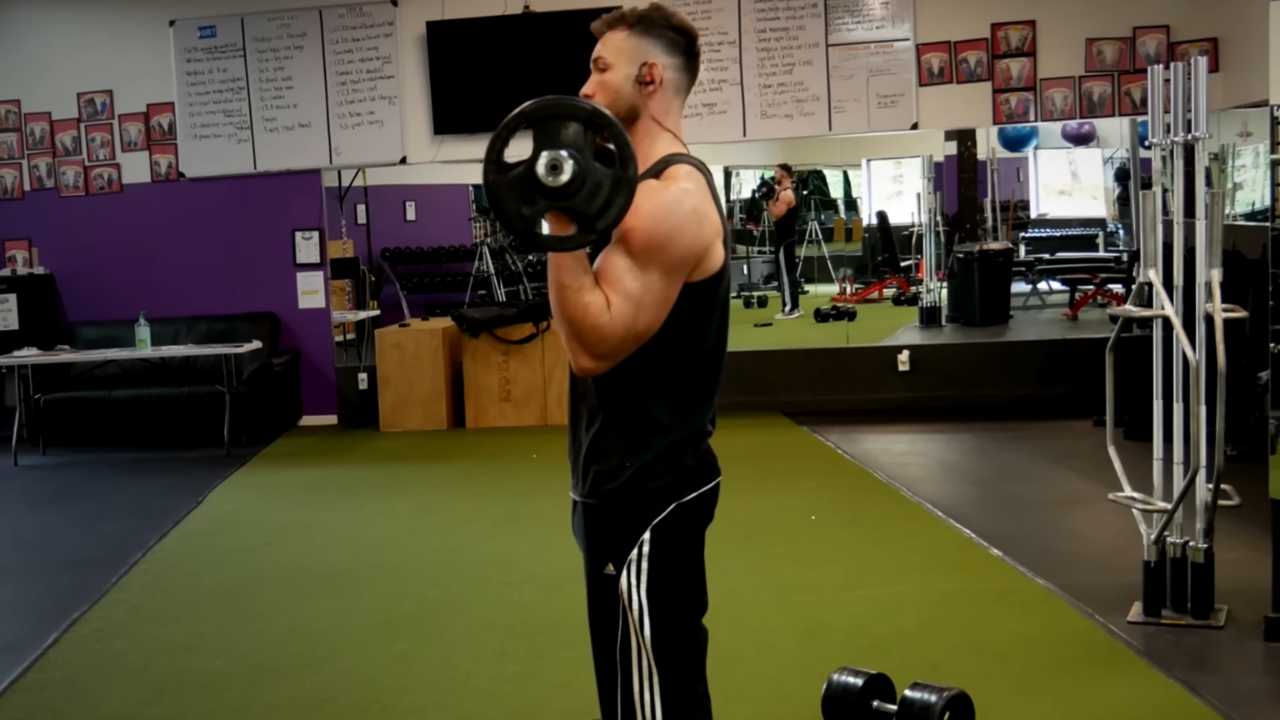
The usefulness of a particular dumbbell weight depends heavily on the movement, the muscles involved, and the person’s strength.
A pair of 10-pound dumbbells might be challenging during lateral raises. That same pair could provide very little resistance during Romanian deadlifts for a well-trained adult.
We consider exercise selection one of the biggest weaknesses in blanket recommendations about light-weight training.
Smaller Muscles Are Easier to Challenge
Isolation movements involving relatively small muscle groups often require modest external loads.
Lateral raises are a particularly good example.
Your lateral raises probably don’t need more weight.
Use a slight pause at the top and stop swinging the dumbbells. Your side delts will notice the difference.
— Up Workout (@Upworkout) September 25, 2026
As the arms move away from the body, the perpendicular distance between the shoulder joint and the dumbbell’s line of gravity generally increases until the arm approaches horizontal.
That increases the external torque the shoulder muscles must overcome.
Your lateral deltoids can therefore experience a substantial challenge with relatively light dumbbells.
We recommend using a consistent arm path, controlling the descent, and keeping torso movement minimal. We are especially skeptical of adding weight to lateral raises when doing so immediately reduces control.
The problem becomes clearer when you calculate the percentage increase. A five-pound dumbbell jump raises the resistance by 50% if you move from 10 to 15 pounds.
For curls and triceps extensions, the same principle applies: select resistance that challenges the intended movement while allowing consistent repetitions.
Larger Muscles Can Outgrow Your Equipment
The quadriceps, glutes, and hamstrings can generate considerable force. Stronger lifters may need substantial resistance to challenge these muscles efficiently.
During a dumbbell Romanian deadlift, the hamstrings and glutes help extend the hips against the external load.
When the dumbbells become too light, a lifter may perform dozens of repetitions before approaching meaningful local muscular fatigue.
Grip endurance and general fatigue can begin to interfere with the set.
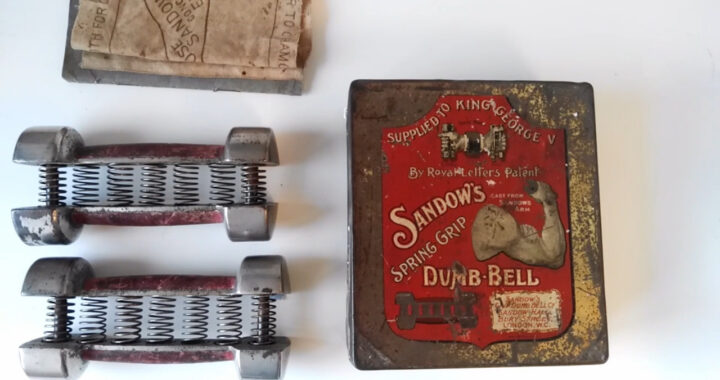
Historical equipment provides an interesting illustration of this problem. Sandow’s spring-grip dumbbells required additional squeezing effort during exercise, primarily increasing the demands placed on the gripping muscles.
For lower-body training with limited weights, we strongly favor split squats, reverse lunges, and other unilateral variations.
They allow a relatively small amount of external resistance to create a demanding challenge for each leg.
Our recommendation is to change the exercise when the existing variation stops challenging the intended muscles efficiently. A more demanding movement often provides a better progression than extending a set to 50 repetitions.
How We’d Train With Lighter Dumbbells for Muscle Growth
When equipment is limited, we prioritize movements that offer a meaningful muscular challenge, straightforward progression, and repeatable technique.
We would begin with a simple full-body routine performed twice weekly, allowing recovery between sessions.
Here is one example.
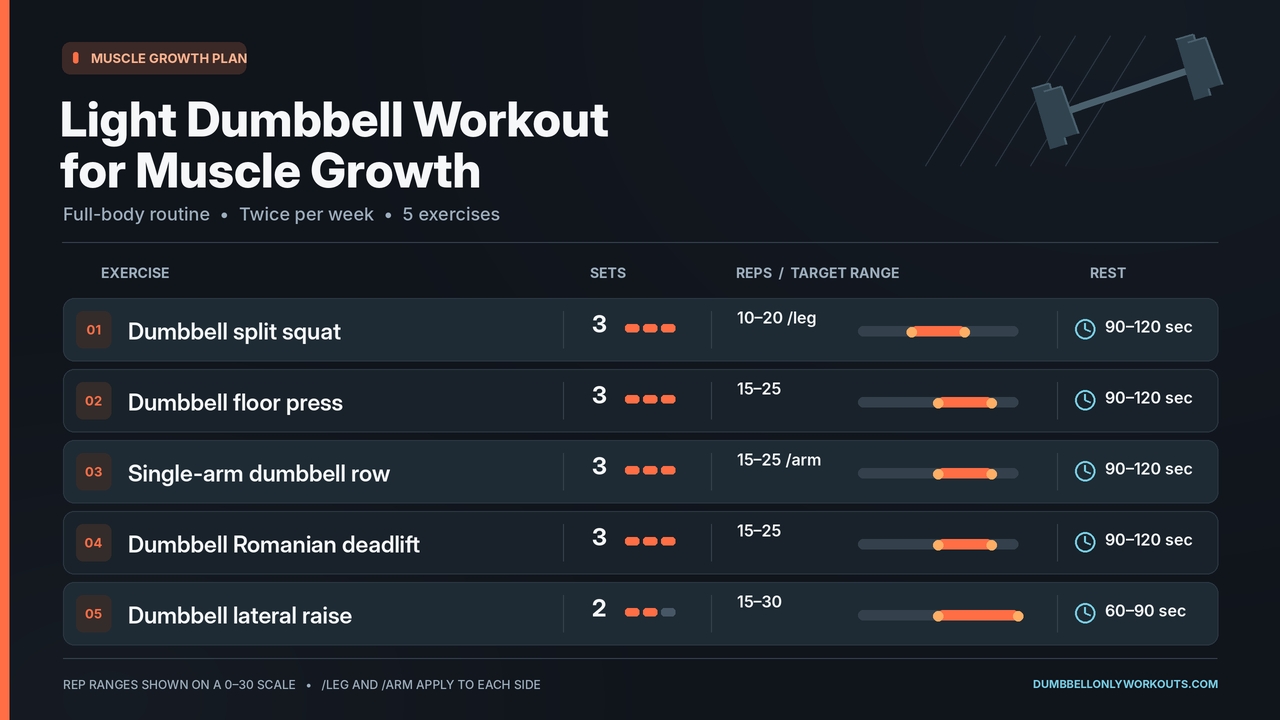
These ranges provide starting targets. Choose weights and repetition counts that bring the working muscles reasonably close to failure while preserving technique. Add rest when necessary to maintain performance.
Our floor-based chest workout offers useful pressing options for anyone training without a bench.
For rows, we often favor pulling the upper arm toward the hip when emphasizing the latissimus dorsi. The lats contribute to shoulder extension, and elbow positioning influences the mechanics of the movement.
We explain this in greater detail in our guide to single-arm dumbbell rows.
The major adjustment we would make involves lower-body loading. If the available dumbbells are too light for a useful Romanian deadlift set, we would move toward a more challenging hip-hinge variation or acquire heavier resistance.
Progression Still Matters
A limited equipment setup makes progression especially important.
Here is the progression system we favor:
- Establish a repeatable baseline. Select an exercise and load that challenge the target muscles within the chosen repetition range.
- Keep the movement consistent. Maintain a useful range of motion and comparable technique between sessions.
- Add repetitions. Gradually increase the number of repetitions performed with the same load.
- Increase resistance when possible. Once you consistently reach the top of the range, move to a heavier dumbbell and rebuild.
- Adjust the movement when equipment limits progression. Use unilateral variations or other suitable changes that increase the muscular challenge.
Suppose you begin floor pressing two 15-pound dumbbells for 15 repetitions.
Several weeks later, you can complete 25 repetitions with the same technique and comparable proximity to failure.
That is genuine performance progress.
Eventually, the same weights may become insufficient for efficient training. Our preference is to recognize that point early and make a deliberate equipment or exercise adjustment.
We also consider consistency across longer periods important. Our article examining a 10-week training break highlights how previous adaptations can influence the return to training.
Progress should be evaluated over months of productive training, with individual sessions providing the information needed to make adjustments.
Our Biggest Concern With Light-Weight Training
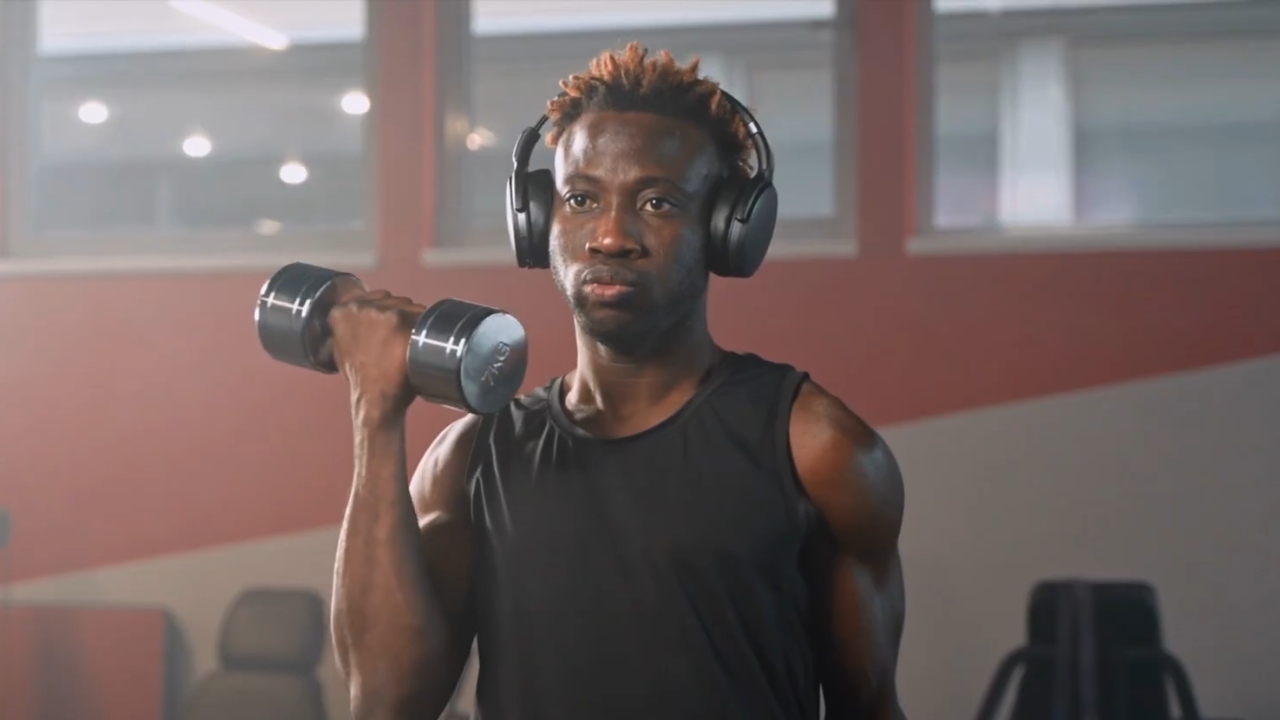
We believe the biggest problem with high-repetition training is the tendency to treat exhaustion as evidence of an effective hypertrophy stimulus.
Consider a set of 40 goblet squats.
By the final repetition, breathing may become difficult, concentration may deteriorate, and the exercise may feel extremely unpleasant.
Yet the quadriceps and glutes could still have considerable force-producing capacity remaining.
That is an inefficient situation for someone whose primary objective is building those muscles.
We see little value in extending sets indefinitely simply because an athlete owns only one pair of dumbbells.
There is also a practical issue with estimating proximity to failure. People may stop higher-repetition sets because of discomfort before reaching the muscular effort required for a strong hypertrophy stimulus.
Beginners face an additional challenge. Learning consistent exercise technique and estimating repetitions in reserve both require practice.
We would establish basic movement skills first, then gradually increase training difficulty as control improves.
Our three-day dumbbell workout for beginners provides a structured starting point for that process.
For more experienced lifters, we would actively question any program that repeatedly demands 40 or 50 repetitions from relatively large muscle groups. We would also examine whether the target muscle is actually limiting performance.
A training method can produce muscle growth and still be a poor use of training time.
This is where our editorial position becomes firm: people training at home should take their equipment limitations seriously. A pair of dumbbells can support excellent progress, and acquiring heavier weights is a sensible investment once current loads are no longer challenging enough.
Light Weights Work, Provided You Make Them Work
@ryanhumiston01 💯Lift heavy weights with light weights to develop muscles💪🏾 #fyp #workout #weights ♬ original sound – Ryan Humiston
Research has established that hypertrophy can occur across a substantial range of resistance loads.
Studies comparing lighter and heavier training have repeatedly reported similar average muscle-growth outcomes when sets were taken to failure. Higher resistance retains an advantage for developing maximum strength.
Our preferred approach is to use that flexibility intelligently.
We favor moderate loads for much of our hypertrophy training, lighter dumbbells for exercises that require relatively little resistance, and heavier weights when the strength of the target muscles demands them.
Exercise selection, technique, proximity to failure, and progression determine how effectively those loads are used.
The strongest conclusion we draw from the research is that a dumbbell’s usefulness should be judged by the challenge it creates for the target muscles and the progress it allows over time.
Choose exercises that make the available resistance meaningful. Track your performance. Increase the challenge when adaptation makes the current workload easier.
That is the standard we believe light-weight training should meet.