The dumbbell Romanian deadlifts are one of our favorite exercises for developing strong hamstrings and glutes. It’s also remarkably easy to get wrong, particularly when you become more concerned with lowering the dumbbells than controlling what your hips are doing.
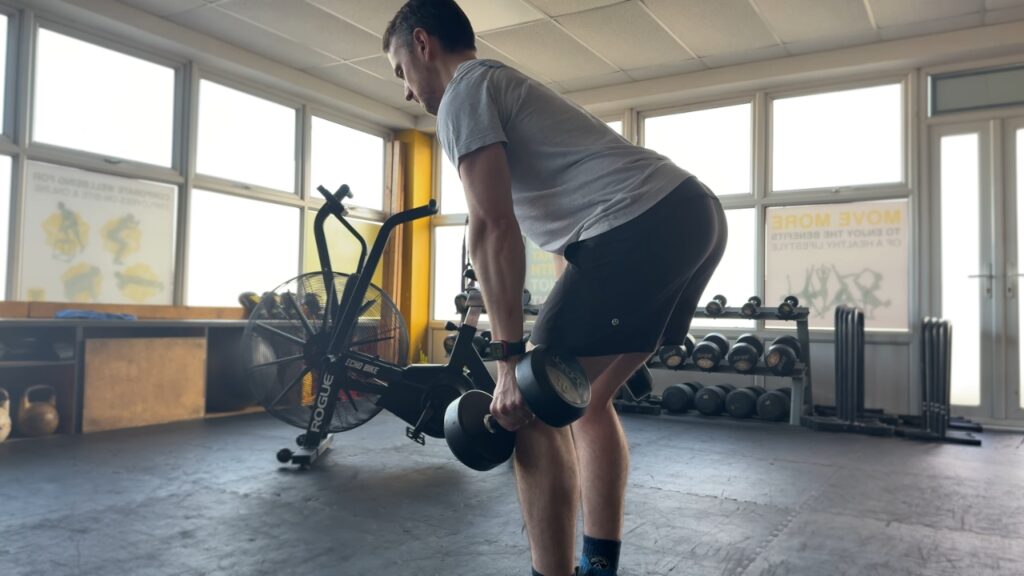
A proper dumbbell Romanian deadlift starts with pushing your hips backward, keeping the weights close to your legs, and maintaining a stable torso. Your hamstrings control the descent, while your hamstrings and glutes help extend your hips to bring you upright.
Your lower back contributes, too. It has to stabilize your spine while you hold the weights. But if your lower back consistently feels like it’s doing most of the work, there’s a good chance something in your technique needs attention.
Fortunately, the fix is usually straightforward. And it often starts with using less weight.
The Dumbbell Romanian Deadlift Is a Hip Hinge
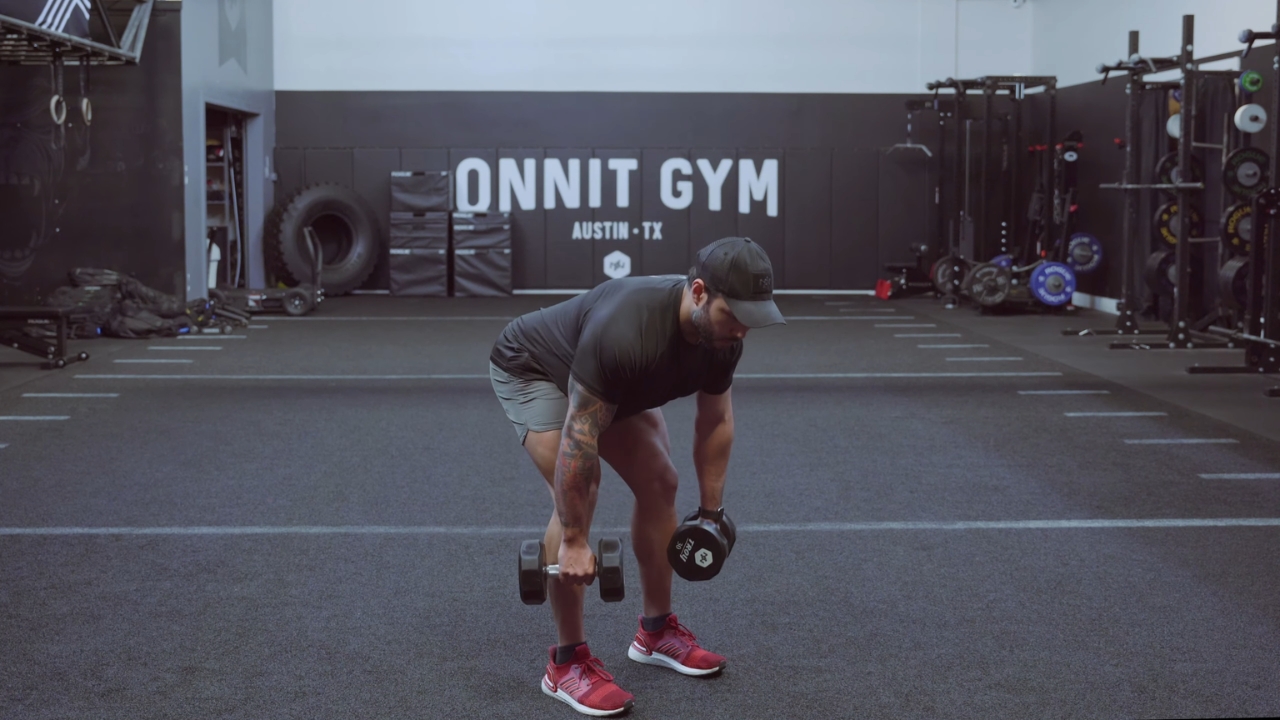
The Romanian deadlift is built around hip extension. Your hips move backward as you lower the dumbbells, then forward as you return to standing.
Your knees remain slightly bent, your torso leans forward, and your spine stays relatively stable throughout the movement.
We think the most useful way to approach this exercise is to stop thinking about how far the dumbbells need to travel.
Their position is a consequence of your hip movement. As your hips move backward, your torso tilts forward and the dumbbells descend naturally.
The NSCA’s Romanian deadlift instructions reinforce the importance of moving the hips backward, controlling the resistance, and maintaining a stable spinal position.
There’s an important mechanical reason for getting this right.
Your hamstrings cross both your hip and knee joints. Keeping your knees slightly bent while flexing at the hips places them under increasing tension as you descend. Your glutes also contribute to the hip extension needed to stand back up.
If you keep bending your knees as you lower the dumbbells, you change the movement. If you round your spine to reach farther, you introduce additional motion that contributes little to the hip hinge you’re trying to train.
We’d rather see a shorter, controlled repetition than an impressive-looking descent that loses the point of the exercise.
How to Perform a Dumbbell Romanian Deadlift Correctly
You need two dumbbells, a stable surface, and enough space to move comfortably.
Start with a weight you can control easily. You can make the exercise harder once your movement becomes consistent.
Here’s our preferred setup and execution:
- Stand with your feet about hip-width apart. Hold a dumbbell in each hand, with your arms extended and the weights resting near the front or sides of your thighs. Distribute your weight across your feet.
- Bend your knees slightly. Keep a soft knee bend throughout the repetition. Some natural movement is fine, but avoid progressively squatting deeper as the weights descend.
- Brace your torso and push your hips backward. Imagine reaching your backside toward a wall behind you. Allow your torso to lean forward while maintaining a comfortable, stable spinal position.
- Lower the dumbbells close to your legs. Keep your arms extended and shoulders controlled. Continue until you reach a strong, manageable hamstring stretch or can no longer hinge farther without changing your spinal position.
- Extend your hips to stand. Push through your feet and bring your hips forward until you’re upright. Finish with your ribs over your pelvis, without leaning backward or aggressively thrusting your hips.
That’s one repetition.
We generally favor a controlled descent lasting around two to three seconds while learning the movement. That gives you enough time to recognize what your hips, knees, and torso are doing.
Once your technique is established, the exact tempo becomes less important than maintaining control.
One final detail: keep your neck reasonably aligned with your torso. Looking straight ahead throughout the descent can encourage unnecessary neck extension. Let your gaze move naturally toward the floor as you hinge.
How Low Should the Dumbbells Go?
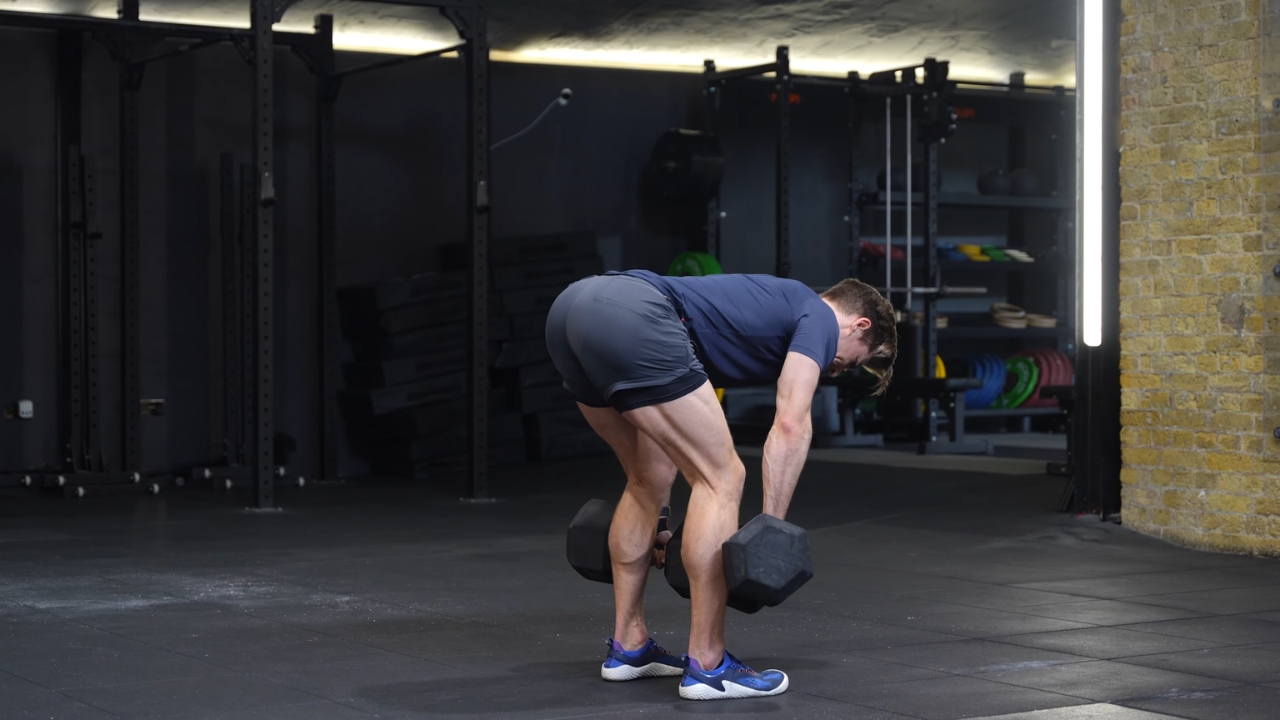
There’s no universal stopping point for a dumbbell Romanian deadlift.
For many people, the dumbbells will finish somewhere around knee to mid-shin height. Others can comfortably lower them farther.
Your range of motion depends on your body proportions, hip mobility, hamstring flexibility, knee position, and ability to maintain a stable torso.
The NASM dumbbell Romanian deadlift guide also prioritizes a controlled hip hinge and adequate hamstring stretch over reaching a particular depth.
Here’s the distinction we want you to recognize.
When your hips have reached the end of their comfortable backward movement, continuing to lower the dumbbells usually requires something else to change. Your knees might bend farther, your pelvis might tuck underneath you, or your spine might flex.
That additional movement can disguise the point where your actual hip hinge ended.
We recommend stopping when you can no longer increase hip flexion comfortably while maintaining the intended position.
Forcing the dumbbells toward the floor accomplishes very little if your hamstrings have already reached their useful range.
What Muscles Should You Feel Working?
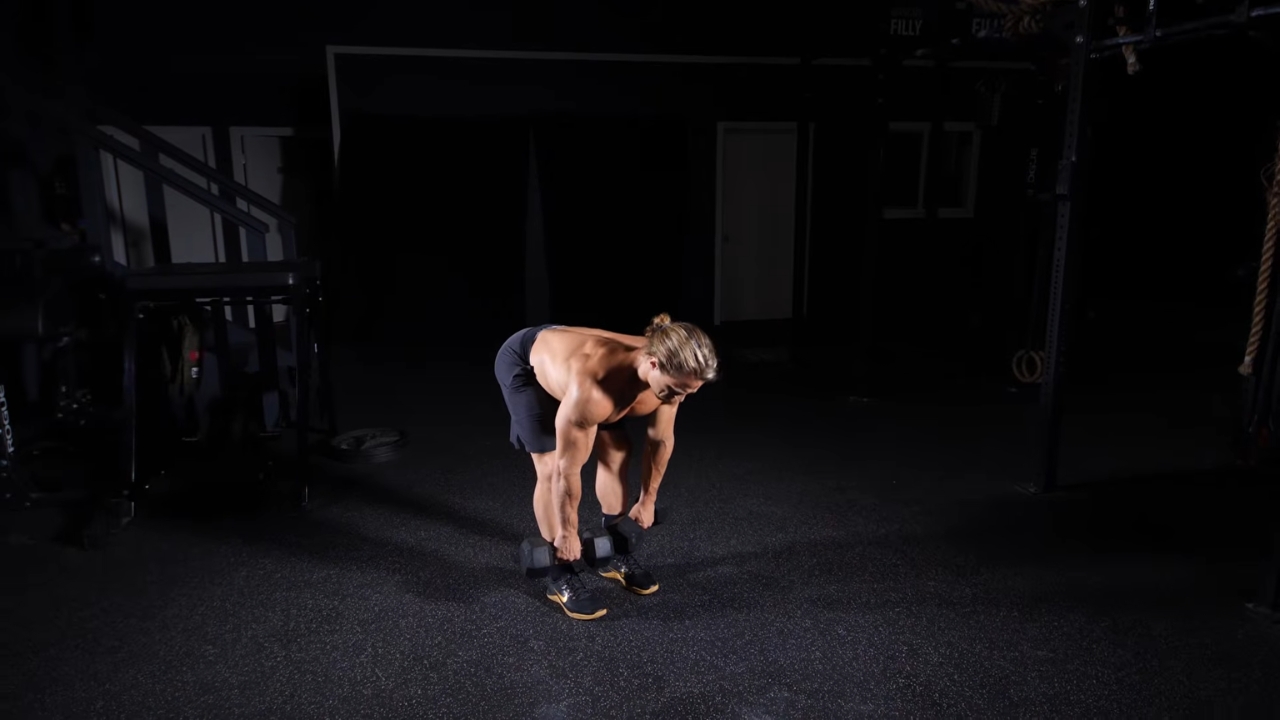
Dumbbell Romanian deadlifts primarily challenge the hamstrings and glutes, with several additional muscle groups helping stabilize the movement.
| Muscle Group | Role During the Exercise |
| Hamstrings | Control hip flexion during lowering and help extend the hips |
| Glutes | Produce force to extend the hips as you stand |
| Spinal erectors | Help maintain your spinal position under load |
| Abdominals | Brace the torso and resist unwanted movement |
| Upper back and forearms | Stabilize and hold the dumbbells |
We wouldn’t judge the exercise entirely by which muscle burns the most.
Your hamstrings should experience meaningful tension, but muscular sensation varies with loading, proportions, technique, and training experience.
Hamstrings During the Lowering Phase
The hamstrings are especially important during the descent.
As you hinge backward, your hip joints flex and your hamstrings lengthen under load. They’re actively controlling that movement.
This is one reason we particularly like Romanian deadlifts for hamstring development. They challenge the muscles at relatively long lengths, providing a useful complement to knee-flexion movements such as leg curls.
You should generally feel increasing muscular tension along the backs of your thighs as you descend.
A strong stretch is fine. Sharp pain or the sensation of something pulling beyond its comfortable range is a reason to stop.
Glutes During the Way Up
Your gluteus maximus contributes to bringing your hips back into extension.
As you stand, your glutes and hamstrings work together to overcome the resistance.
You may feel your hamstrings more distinctly than your glutes. That doesn’t mean your glutes have stopped working.
We aren’t fans of exaggerated glute squeezing at the top of every Romanian deadlift. Your goal is to finish standing tall with your hips extended.
Leaning backward to manufacture a stronger contraction adds unnecessary movement.
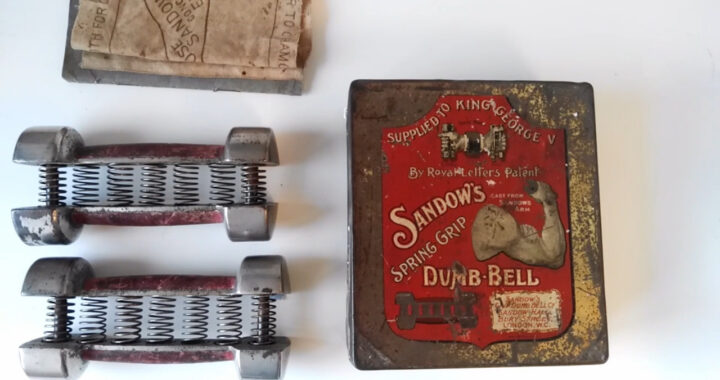
As for your grip, it should be strong enough to hold the dumbbells securely. We’re amused by historical inventions such as Sandow’s spring-grip dumbbells, but making a handle harder to squeeze wouldn’t necessarily improve the exercise’s hamstring stimulus.
Why You Feel Dumbbell Romanian Deadlifts in Your Lower Back
View this post on Instagram
Some lower-back effort is completely normal during Romanian deadlifts.
Your spinal erectors must generate force to stabilize your torso against the external load. The farther forward your torso leans, the more demanding that stabilization can become.
We wouldn’t interpret ordinary muscular fatigue as proof of poor technique.
However, if your lower back consistently becomes exhausted while your hamstrings barely feel challenged, we’d examine a few things.
You’re Bending at the Waist Instead of Moving Your Hips
This is our first suspect.
If your hips barely travel backward, you might be producing much of the lowering movement through your spine.
Your torso needs to lean forward during an RDL, but that movement should primarily result from flexion at the hip joints.
Try pushing your hips farther backward while keeping your knees softly bent.
Think about increasing the distance between your hips and your shoulders through the hinge, rather than simply folding your chest toward your knees.
You’re Letting the Dumbbells Drift Away
The dumbbells should remain close to your legs throughout the movement.
When they drift farther forward, the horizontal distance between the resistance and your hip and spinal joints increases. This increases the external torque your muscles must resist.
Your lower back may consequently work harder to maintain your torso position.
Keep the dumbbells traveling close to your thighs and shins.
They don’t need to scrape your legs, and you don’t need to actively pull them into your body. Just avoid reaching forward with the weights.
You’re Using Too Much Weight
You’re Using Too Much Weight
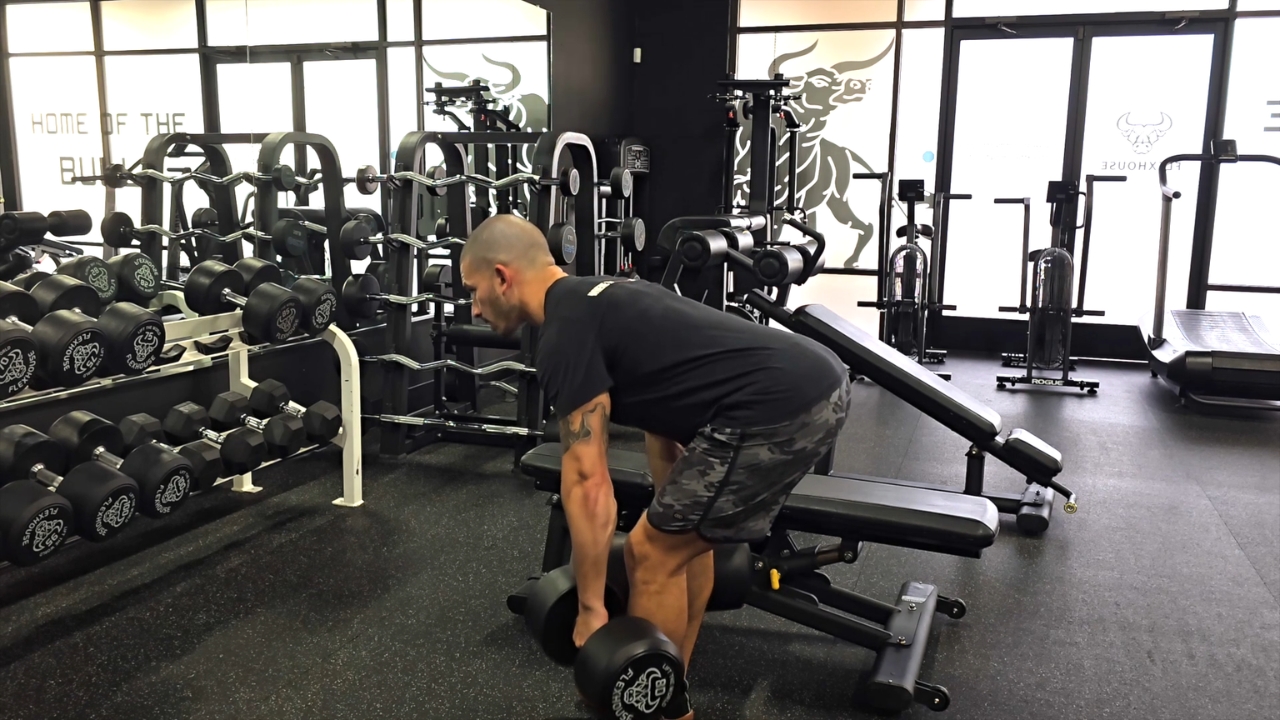
A heavier dumbbell is useful only when you can maintain the movement you intended to perform.
If your hips stop moving backward, your shoulders round uncontrollably, or you have to jerk yourself upright, the load may be exceeding your current ability to control it.
Drop the weight and perform several deliberate repetitions.
We’d rather see ten consistent hip hinges with moderate dumbbells than six heavy repetitions where the movement changes every time.
We’ve discussed how lighter dumbbells can build muscle when sets provide sufficient effort. Increasing the load is one way to make training harder, but it’s hardly the only variable worth considering.
You’re Bending Your Knees Too Much
A Romanian deadlift requires some knee flexion. Locking your knees completely isn’t necessary.
However, repeatedly bending your knees farther as the dumbbells descend shifts the movement toward a squat-like pattern.
It also changes hamstring length because the hamstrings cross the knee joint.
We suggest establishing a comfortable knee bend near the beginning of the repetition and maintaining approximately that position as you hinge.
Think hips backward, with your shins remaining relatively vertical.
Learn the Hip Hinge With a Wall
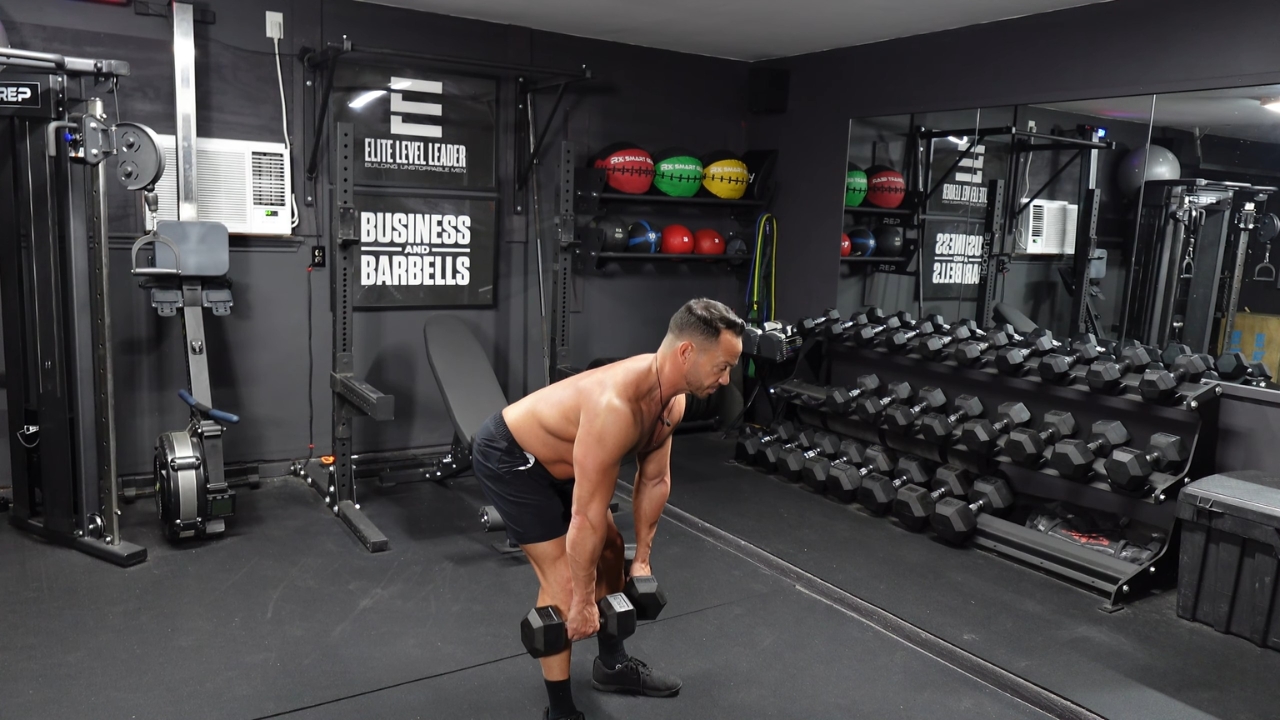
If the hip hinge still feels unfamiliar, we recommend putting the dumbbells aside and practicing against a wall.
It’s a simple drill that gives your hips a physical target.
- Stand facing away from a wall, roughly 6–12 inches from it.
- Place your feet around hip-width apart and bend your knees slightly.
- Push your hips backward until your glutes lightly touch the wall.
- Keep your torso stable and your feet planted.
- Return to standing and repeat.
If you find yourself squatting to reach the wall, move closer and try again.
As the movement becomes more comfortable, gradually increase your distance from the wall.
The beauty of this drill is that you can immediately tell whether your hips are moving backward.
Once you can perform the movement consistently, pick up light dumbbells and recreate the same pattern.
Your hip hinge should look and feel fundamentally similar with or without weight.
How Heavy Should You Go With Dumbbell Romanian Deadlifts?
Choose a load that challenges your hamstrings and glutes while allowing you to complete every repetition with consistent control.
For someone learning the exercise, our starting recommendation would be:
- Sets: 2–3
- Repetitions: 8–12
- Effort: Finish with approximately 2–3 good repetitions in reserve
- Rest: Around 2 minutes between sets, or longer if needed
Those numbers are a practical starting point, not a rigid requirement.
Once you’re comfortable with the movement, three or four challenging sets can work well, depending on your program and recovery.
We particularly like double progression for dumbbell Romanian deadlifts.
Suppose you’re performing three sets of eight with 25-pound dumbbells.
Instead of immediately reaching for heavier weights, work toward three sets of twelve while maintaining the same hip hinge, range of motion, and control.
When you reach the upper end of your repetition range, increase the weight and return toward the lower end.
Your progression might look like this:
| Stage | Dumbbell Weight | Target |
|---|---|---|
| Starting point | 25 lb each | 3 × 8 |
| Build repetitions | 25 lb each | 3 × 10 |
| Reach upper range | 25 lb each | 3 × 12 |
| Increase resistance | 30 lb each | 3 × 8 |
The precise numbers are illustrative. What matters is earning your next weight increase through consistent performance.
We also recommend taking enough rest between challenging sets. Your hamstrings, glutes, and spinal erectors need time to recover sufficiently for the next effort.
For heavier compound movements, we’ve explained why longer rest periods often make sense.
There’s little benefit in rushing your next set when your breathing, grip, or lower-back fatigue prevents you from performing the movement properly.
Where Romanian Deadlifts Fit Into Your Workout
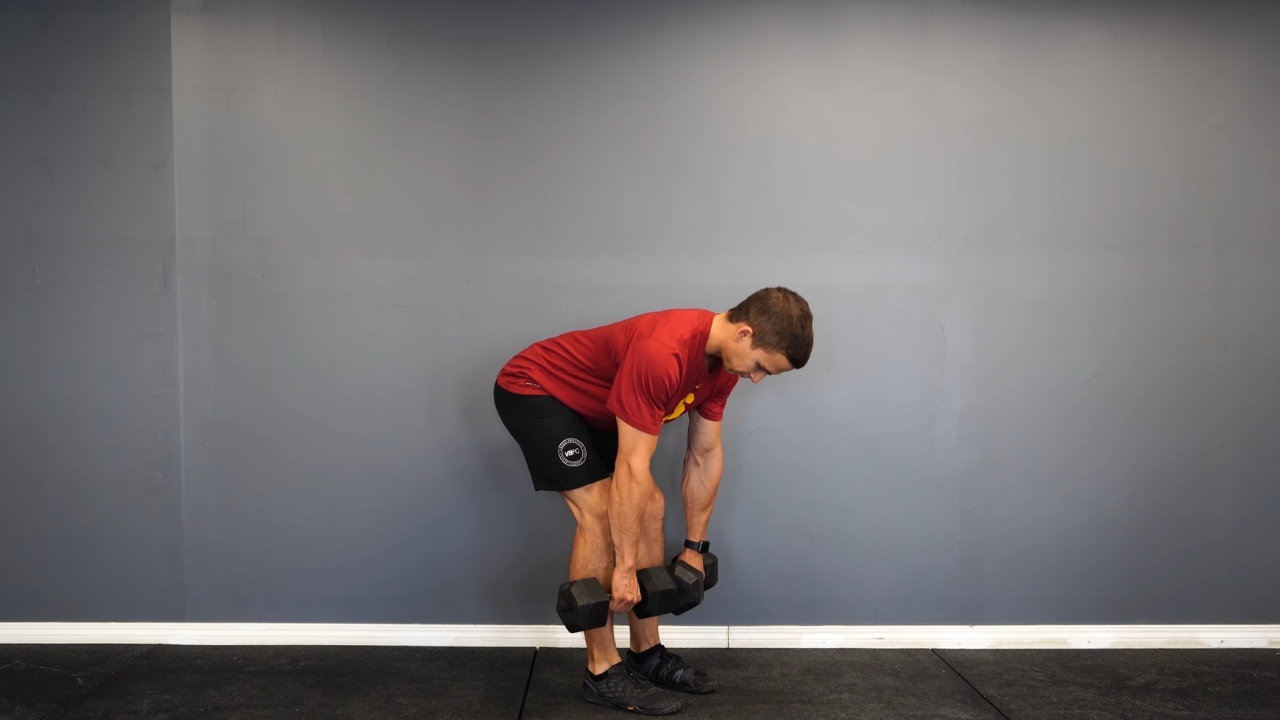
We generally prefer placing dumbbell Romanian deadlifts early in a lower-body workout, when you’re fresh enough to handle demanding hip hinges.
They combine especially well with knee-dominant exercises such as goblet squats, reverse lunges, and split squats.
For a straightforward lower-body session, we’d consider something like this:
| Exercise | Sets | Reps |
|---|---|---|
| Goblet squat | 3 | 8–12 |
| Dumbbell Romanian deadlift | 3 | 8–12 |
| Reverse lunge | 2 | 8–10 per leg |
| Standing calf raise | 3 | 12–20 |
This gives you a combination of hip extension, knee extension, single-leg work, and calf training without turning the session into an endurance contest.
For beginners, performing Romanian deadlifts once or twice per week is a reasonable starting point.
Our simple 3-day dumbbell workout provides a practical way to organize full-body training without needing a complicated exercise rotation.
The updated ACSM resistance-training recommendations also support a relatively straightforward approach to building strength and muscle, including training at home with accessible equipment.
Your total weekly training matters more than finding one supposedly perfect day for Romanian deadlifts.
If you already perform challenging split squats, lunges, and other posterior-chain exercises, account for that workload before adding more RDL sets.
And if your hamstrings remain unusually sore or your performance declines between sessions, adjust your training volume or recovery time.
FAQs
Should Dumbbell Romanian Deadlifts Make Your Hamstrings Sore?
Not necessarily. Your hamstrings might be sore when you’re new to the exercise, particularly because you’re training them under tension at longer muscle lengths.
Soreness should generally decrease as you become accustomed to the movement. It isn’t required for muscle growth, and I wouldn’t judge the quality of your workout by how difficult walking downstairs feels tomorrow.
Should Your Back Be Completely Straight During Romanian Deadlifts?
Aim to maintain a relatively neutral spinal position rather than deliberately rounding or excessively arching your back.
Your spine has natural curves, so trying to make it perfectly straight isn’t particularly useful. What’s more important is keeping your torso stable and avoiding uncontrolled spinal movement under load.
If you experience sharp or persistent back pain, stop the exercise and have the symptoms assessed by an appropriate healthcare professional.
Are Dumbbells as Good as a Barbell for Romanian Deadlifts?
Both can build strong hamstrings and glutes.
Dumbbells allow your arms to move independently and are particularly convenient for home training. Barbells generally make it easier to use heavier total loads as you become stronger.
For someone learning the hip hinge or training at home, I’m perfectly happy recommending dumbbells.
Let Your Hips Do the Work
@petermiljak Dumbbell RDLs (Romanian Desdlifts) – Stop rushing the movement, only doing half reps or coming down too far where your low back starts to round. Focus on your set up, and the biggest cue i have found to help is having feet pronated so the pressure is more on the inside of your feet not the outside. I feel it much more on my hamstrings and glutes with that single cue. Thanks to @Eugene Teo for that foot cue, its helped me out a lot. – #fittok #gymtok #rdls #legworkout #gymtips #hamstrings ♬ original sound – Peter Miljak
Our biggest piece of advice for dumbbell Romanian deadlifts is to make every repetition look like the same deliberate hip hinge.
Push your hips backward, maintain a manageable knee bend, keep the dumbbells close, and stop descending when you’ve reached the end of your controlled range.
Then extend your hips and stand upright.
You don’t need to touch the floor, produce a dramatic glute squeeze, or chase heavier weights at the expense of your movement.
And if you’ve taken time away from training, there’s no reason to rush back to your previous loads. Research on returning after a training break suggests that previously developed strength and muscle can return relatively quickly with resumed training, although individual results vary.
Build a consistent hip hinge first. Add repetitions and resistance as your strength improves.
The Romanian deadlift is a remarkably effective exercise when you respect its mechanics.
Give your hamstrings and glutes a challenging job to do, and let the dumbbells follow your hips.