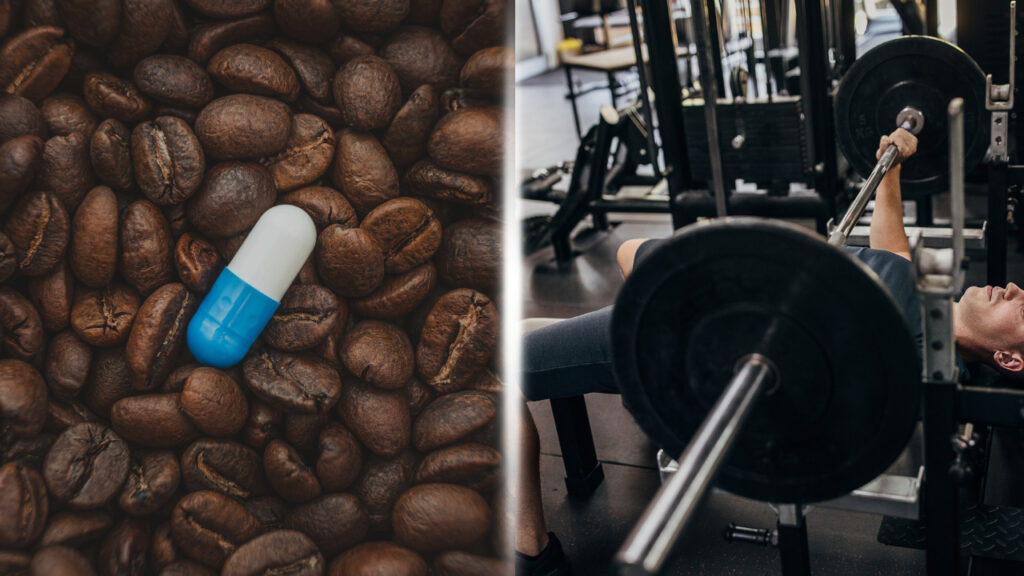
Fifteen experienced lifters took identical, inactive capsules before bench pressing. Those who believed they had consumed caffeine completed nearly four more repetitions than when they knew the capsules were inactive.
The 2023 experiment raises a fascinating question about strength training: how much can our expectations influence performance when the physical demands remain unchanged?
We think the answer deserves attention, especially because other experiments have produced conflicting results.
The Study Where Believing in Caffeine Meant More Reps
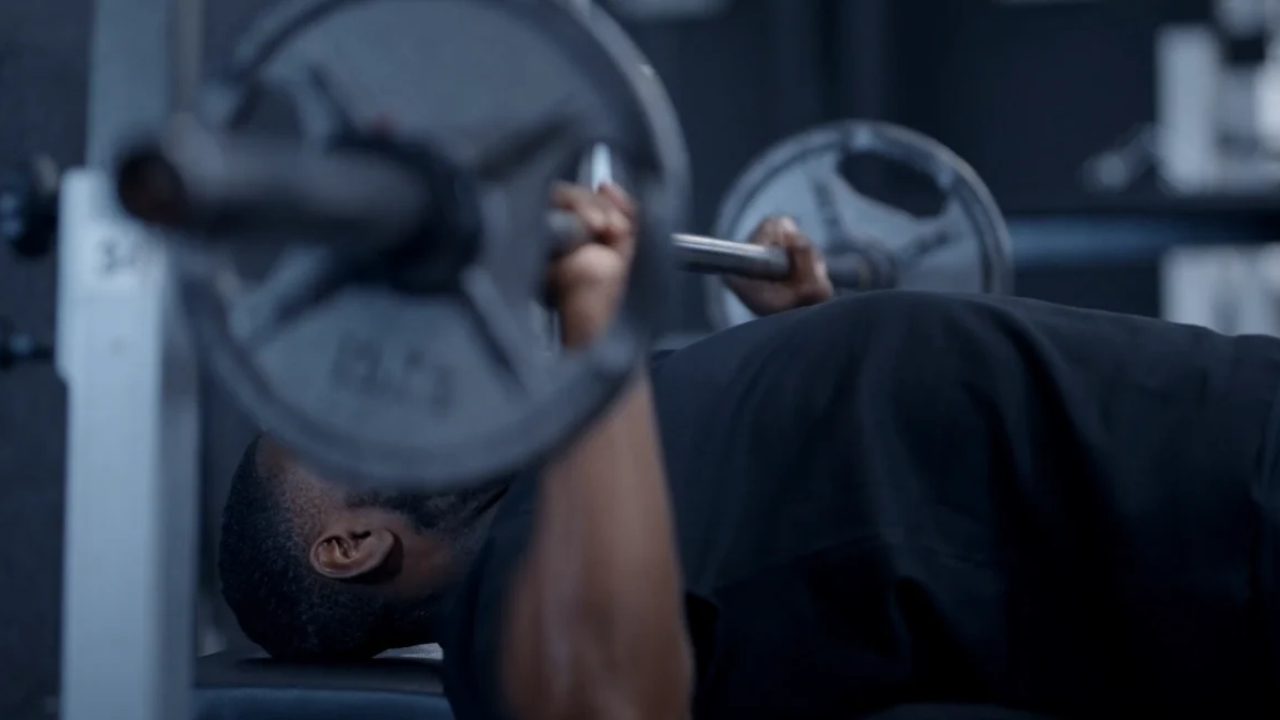
A 2023 study published in the International Journal of Health Sciences recruited 15 men with an average of 7.4 years of resistance-training experience. Their average age was 41.
Each participant completed bench press testing across three experimental sessions. Before each session, they swallowed a capsule containing 300 milligrams of cellulose, an inactive substance.
Researchers manipulated what participants believed they had consumed.
- Caffeine: Participants were told the capsule contained a substance that could enhance exercise performance.
- Lactic acid: Participants were told the capsule contained a substance expected to impair performance.
- Cellulose: Participants were correctly informed that the capsule contained an inactive substance.
Every capsule contained exactly the same material.
Approximately 50 minutes after ingestion, participants completed a standardized warm-up followed by one bench press set to concentric failure at 80% of their one-repetition maximum (1RM).
Researchers measured completed repetitions and perceived exertion.
The Results Were Hard to Ignore
| What participants believed | Average repetitions | Perceived effort (0–10) |
| They took caffeine | 14.1 | 6.4 |
| They took cellulose | 10.3 | 7.4 |
| They took lactic acid | 7.5 | 8.3 |
Believing they had consumed caffeine was associated with approximately 37% more repetitions compared with the neutral cellulose condition.
Participants also reported lower perceived exertion despite completing more repetitions.
The lactic acid condition produced the fewest repetitions. Its difference from the neutral condition was not statistically significant, although perceived exertion was significantly higher.
We find the relationship between performance and perceived effort particularly interesting.
Participants apparently experienced the demands of the exercise differently depending on what they expected from the capsule.
The experiment also has an important limitation. Fifteen participants performing one demanding set under each condition provide evidence of an immediate response. The findings cannot establish how consistently the effect would appear across different exercises, training programs, or populations.
That distinction deserves more attention than the impressive 37% figure.
Your Muscles Didn’t Suddenly Become Stronger
The participants experienced no physiological benefit from the cellulose capsules. Their muscles had received no additional fuel, and the capsules contained no stimulant.
The researchers were investigating the influence of expectations on performance.
This is the placebo effect: an individual’s expectations surrounding an intervention can influence their responses even when that intervention contains no active treatment.
Several mechanisms could help explain the resistance-training findings, including changes in motivation, attention, perceived effort, and willingness to continue exercising under fatigue.
The experiment did not establish which mechanism accounted for the extra repetitions.
Consider what happens near the end of a difficult dumbbell bench press set.
Repetition speed slows. Your chest, shoulders, and triceps are working hard. The next repetition suddenly feels questionable.
At that moment, your judgment about your remaining capacity becomes important.
A lifter who expects an unusually productive workout might attempt another repetition. Someone anticipating poor performance might become more conservative.
We suspect this decision-making process plays a larger role in everyday training than many lifters appreciate.
Our concern is that people often use discomfort as an inaccurate measurement of muscular failure. A difficult repetition provides useful feedback, though its difficulty alone cannot determine precisely how many repetitions remain.
Learning to interpret that feedback is a trainable skill.
An Earlier Study Found Something Similar
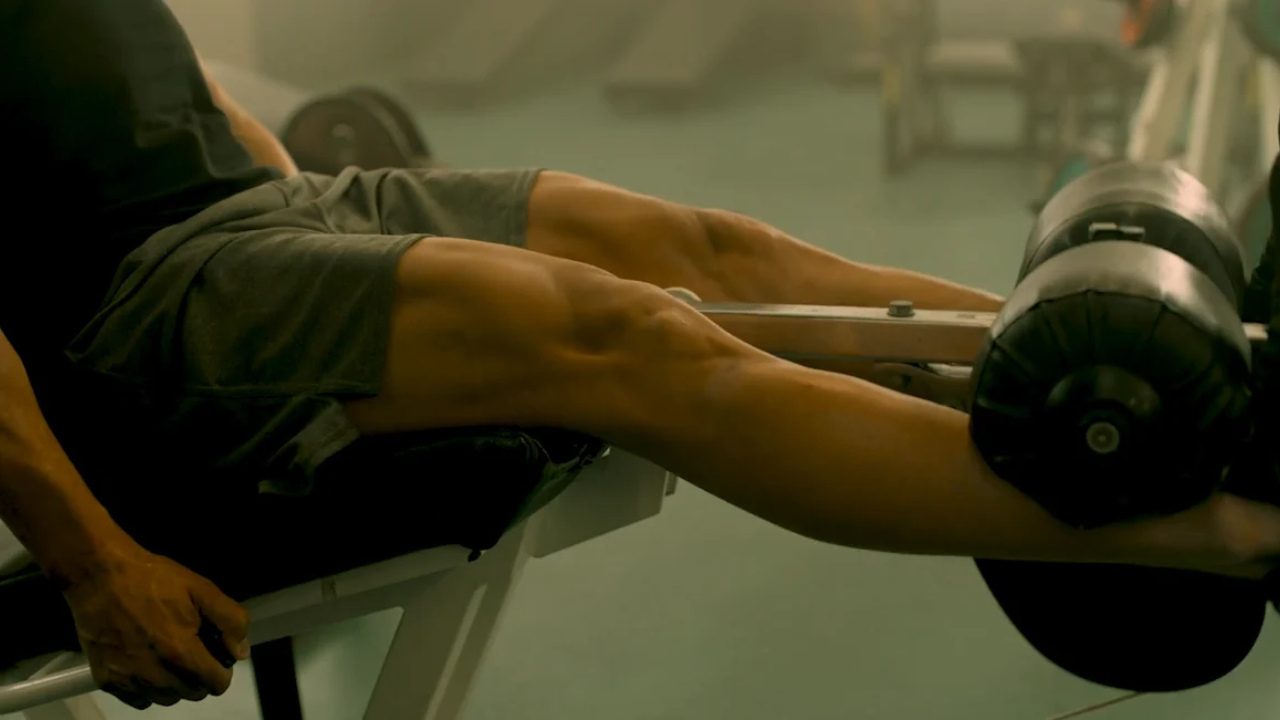
The 2023 experiment followed earlier research examining caffeine expectations during resistance exercise.
In a 2009 study by Duncan and colleagues, 15 men performed single-leg extensions to voluntary failure at 60% of their one-repetition maximum.
The experiment included control, perceived-caffeine, and perceived-placebo conditions.
Participants consumed an inactive solution during both experimental drink conditions. Researchers manipulated whether they believed the drink contained caffeine.
Those who believed they had consumed caffeine completed approximately two additional repetitions compared with the perceived-placebo condition.
Their overall perceived exertion was also lower.
Two repetitions can represent meaningful improvement during muscular-endurance testing. Progressing from 10 to 12 repetitions with the same resistance represents a 20% increase in completed repetitions.
Still, we would be cautious about treating these additional repetitions as evidence of greater muscle growth.
Neither experiment measured long-term hypertrophy. They examined immediate exercise performance under carefully controlled conditions.
We also question whether an expectation-induced increase in repetitions would produce a meaningful training advantage once lifters already understand their capabilities and consistently train near failure.
That’s a question for future research.
Not Every Study Found a Performance Benefit

The evidence becomes less convincing when we examine studies that failed to reproduce the effect.
This is why we strongly disagree with portraying caffeine placebos as a reliable performance-enhancement strategy.
The positive experiments are interesting. Their findings require careful interpretation alongside studies showing little measurable benefit.
A 2020 Study Found No Extra Repetitions
A 2020 study involving 13 resistance-trained women investigated the placebo effect among participants accustomed to regular caffeine consumption.
During one session, researchers told participants they would receive caffeine at 6 milligrams per kilogram of body weight.
They actually received a placebo.
During another session, participants performed testing without ingesting a substance.
Researchers measured maximum bench press strength and repetitions performed at 50% of 1RM.
The results were remarkably similar.
Participants averaged 32.2 repetitions in the control condition and 31.8 repetitions when they believed they had consumed caffeine.
Neither muscular endurance nor maximum strength improved significantly.
The researchers discussed habitual caffeine consumption as a possible explanation for the absent placebo response.
We consider that explanation plausible, though the experiment cannot establish whether regular caffeine use was responsible.
An equally important observation is that simply expecting caffeine offered no measurable advantage in this particular group.
A 2024 Study Produced Mostly Similar Results
View this post on Instagram
Another study published in Nutrients in 2024 examined 18 participants experienced with resistance training and caffeine consumption.
Researchers told participants they had received a high caffeine dose of 9 milligrams per kilogram of body weight.
Once again, the substance was cellulose.
Participants completed bench press and squat assessments using loads corresponding to 50%, 75%, and 90% of their one-repetition maximum.
The majority of measured strength-performance variables showed no statistically significant improvement.
Some participants nevertheless reported sensations associated with caffeine consumption, including increased activeness and nervousness.
This finding deserves attention because expectations appeared capable of influencing subjective experiences without reliably improving performance.
The inconsistency also appears outside resistance training.
A 2026 running study discussed by Marathon Handbook examined 14 trained male runners completing five 1,000-meter intervals.
Believing they had consumed caffeine produced no statistically significant improvement in running performance.
We see a consistent lesson emerging from these experiments: placebo responses can occur, their magnitude varies, and positive expectations provide no guarantee of improved performance.
What We Take From This for Dumbbell Training
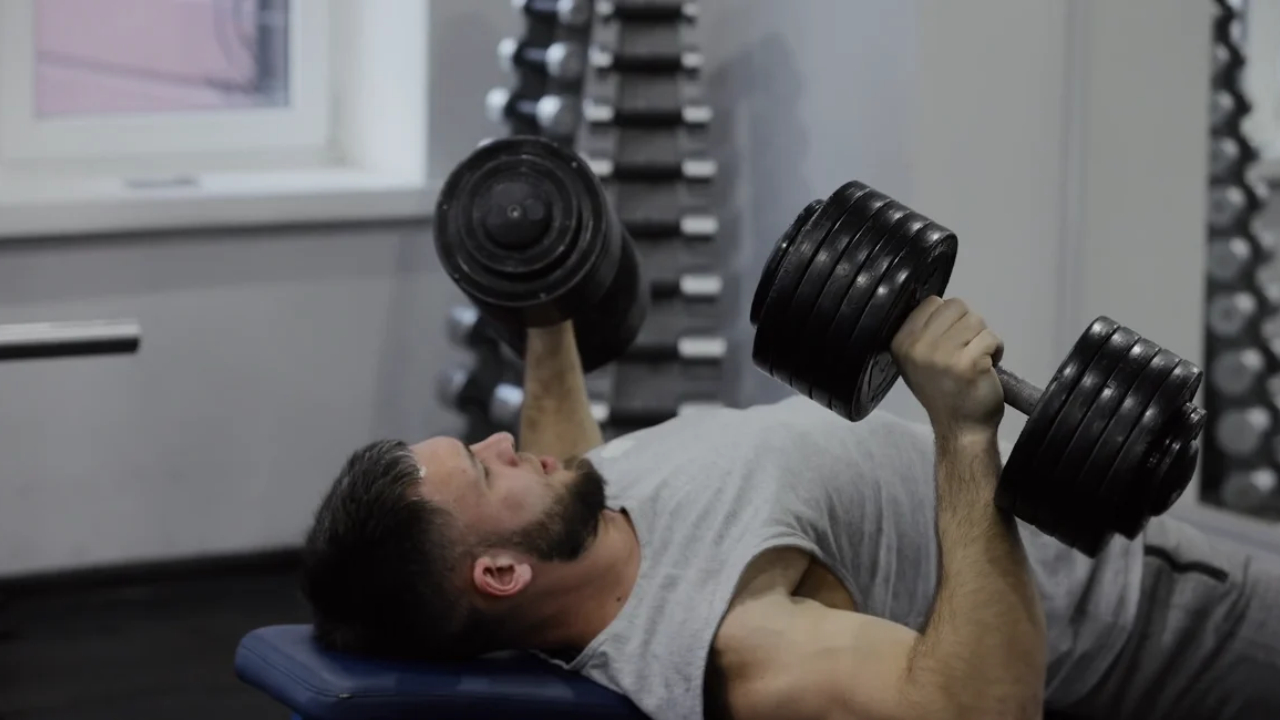
We wouldn’t recommend placebo capsules, elaborate motivational rituals, or deliberately deceiving lifters about supplements.
The most useful application concerns how people interpret fatigue, measure performance, and prepare for demanding sets.
Here are four principles we believe deserve priority.
1. Don’t Confuse Discomfort With Failure
Muscular discomfort increases as a demanding set progresses. Repetition speed often decreases, and maintaining proper technique requires greater effort.
These sensations can help us estimate our proximity to failure.
They are imperfect indicators.
This matters particularly when building muscle with lighter dumbbells, where achieving sufficient muscular fatigue may require relatively high repetition counts.
We generally favor completing most working sets with approximately one to three repetitions in reserve.
That recommendation depends on exercise selection, experience, and the purpose of the session.
For someone consistently stopping five or six repetitions before failure, occasional carefully controlled sets closer to failure can help improve their ability to estimate remaining repetitions.
We recommend using familiar, stable exercises for this purpose.
Technique should remain controlled, and joint pain is a reason to stop and reassess the exercise.
Our position is that learning to judge proximity to failure accurately deserves more attention than pursuing temporary motivational boosts.
2. Use a Consistent Pre-Workout Routine
We prefer straightforward preparation before demanding dumbbell workouts.
For a pressing exercise, our approach would involve several controlled repetitions with a lighter weight, followed by an additional warm-up set if the working weight requires it.
We would check shoulder positioning, elbow movement, range of motion, and control throughout the exercise.
The goal is to establish predictable movement mechanics before the challenging sets begin.
A familiar routine can also create positive expectations about the upcoming workout.
We see that as a useful secondary benefit.
There is little justification for constantly changing pre-workout supplements or searching for increasingly elaborate preparation rituals.
Our recommendation is to build a routine that improves readiness, requires minimal effort to repeat, and supports consistent training performance.
3. Track Repetitions Instead of Relying on Feelings
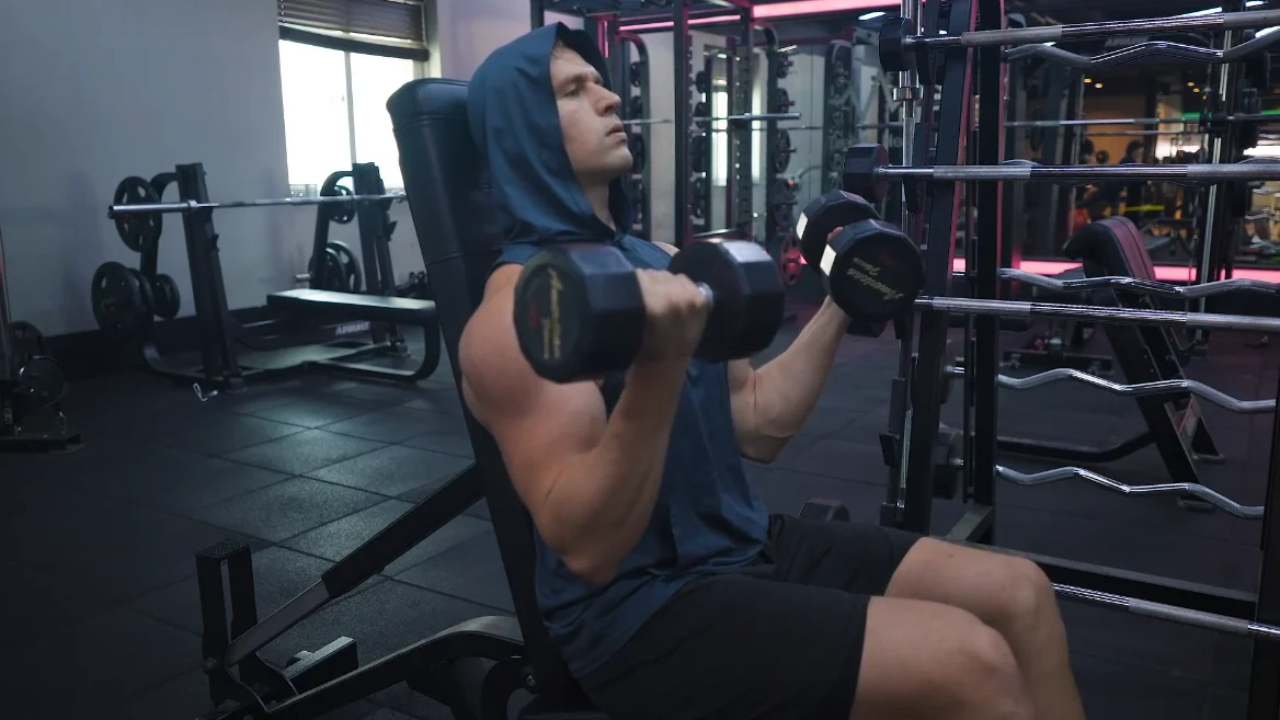
The placebo experiments demonstrate why perceived readiness should be interpreted cautiously.
People can experience different levels of perceived effort while performing physically similar tasks.
That makes training records particularly valuable.
We recommend recording:
- The dumbbell weight used for each exercise.
- Completed repetitions across working sets.
- Estimated repetitions remaining at the end of each set.
- Rest periods between demanding sets.
Tracking these variables makes it easier to identify actual improvements.
We also believe rest periods deserve greater consistency than they typically receive.
As discussed in our article about longer rest between heavy dumbbell sets, sufficient recovery can help preserve performance during subsequent sets.
If someone completes more repetitions after extending their rest period from 60 seconds to three minutes, the additional recovery offers an obvious possible explanation.
We would investigate changes in training conditions before attributing improvements to motivation, supplements, or mindset.
4. Be Careful What You Tell Yourself Before Lifting
We think negative expectations deserve particular attention.
Repeatedly approaching challenging sets with the assumption that performance will be poor can influence how someone responds to increasing effort.
The 2023 experiment offers a useful example, although its negative-expectation condition produced no statistically significant reduction in repetitions compared with the neutral condition.
Our preference is to keep pre-set instructions specific and practical.
For a difficult dumbbell press, we would emphasize three cues:
Control the lowering phase. Maintain a consistent pressing path. Complete every technically sound repetition available within the target effort.
These instructions direct attention toward performance variables the lifter can control.
We strongly oppose motivational advice that encourages people to ignore pain or push through deteriorating technique.
Confidence is useful when it supports disciplined effort. Training decisions still need to respect physical limitations.
Does This Mean Actual Caffeine Doesn’t Matter?

Not at all.
Caffeine has established physiological effects, including its ability to block adenosine receptors in the central nervous system.
Research supports improvements in certain measures of strength, muscular endurance, and exercise performance following caffeine consumption.
The magnitude of those benefits depends on factors including dosage, the individual, and the exercise being performed.
The placebo experiments investigated expectations surrounding caffeine consumption. Their findings do not invalidate the substance’s established pharmacological effects.
We also see little justification for treating caffeine as an essential component of strength training.
Someone who enjoys coffee before exercising and tolerates it well may find it useful.
We would strongly discourage sacrificing sleep quality or repeatedly increasing stimulant intake to pursue relatively small performance improvements.
For recreational lifters, consistency, progressive overload, sufficient recovery, and an appropriate training schedule deserve greater priority.
Someone beginning resistance training will likely benefit more from following a simple three-day dumbbell workout than experimenting with increasingly complicated pre-workout strategies.
Expectations Matter, but They Aren’t Everything
☕ How much caffeine is actually enough for better performance?
It’s not about chugging energy drinks or smashing pre-workout. The right dose at the right time can boost endurance and strength without messing with your sleep.
Check out the latest blog to see what the research says and how to tailor caffeine intake to your training goals 👉
https://t.co/yXH3p2TDZk#PersonalTrainer #CaffeineForPerformance #PTTips #TRAINFITNESS
— TRAINFITNESS (@trainfitnessint) July 30, 2025
The 2023 experiment produced a remarkable result: nearly four additional bench press repetitions following identical inactive capsules.
Other studies have failed to reproduce similar performance improvements.
Our takeaway is straightforward. Expectations deserve consideration because they can influence perceived effort and, under certain conditions, exercise performance.
We believe the best practical response is to improve how we assess fatigue, prepare for demanding sets, and measure progress.
Confidence can influence a workout. Consistent training determines what we can build from it.